Duck Soup goes French, sort of
My review of Cafe Francois in Borough Market didn’t sit well with some people, in part because of my conclusion that its savoury main menu wasn’t French enough. Plus the quality of its cooking, apart from a few bright spots, was overrated and astonishingly mediocre. Which, depending on your view of our cousins across the Channel, isn’t terribly French either.
So, by the first part of that rationale, you’d be forgiven for thinking that I wouldn’t be especially impressed with Camille either as it also wears its Gallic influences comparatively lightly. Except Camille couldn’t be more different. And its cosy bistro-esque vibes, as opposed to Cafe Francois’ cavernous brasserie digs, are just the beginning of the differences, not the end.
Small plates at Camille
Camille’s version of pate en croute was the perfect marriage of pig and carbs. The buttery pastry was instantly charming, but quickly yielded the stage to the quiveringly salty aspic and hearty, coarse pork. The fig relish was hardly necessary, but the capers did help cleanse the palate. A second portion could have done with more aspic, but that’s also arguably nitpicking.


A pistachio ‘vichyssoisse’ was more like a collection of vajazzled crudites. The crisp and mildly sweet jumble of vegetables came in a puddle of… something equally mild in its sweetness. Sometimes, the old ways are better.

A savoury choux bun might not sit well with traditionalists, but Camille’s kitchen shows that it can be done and done well. Firm then soft, the bread-like dough cradled lightly salty and creamy head crab meat tinged with a citrusy cream and what I’m pretty sure was dill. It was all perfectly judged in every way. Not too much of anything, but not too little either.

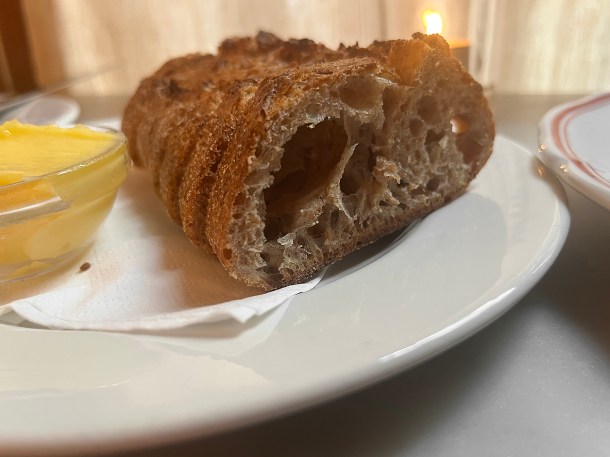
Langoustines were surprisingly unmemorable, but that effect most certainly did not apply to the prawn head butter that the crustaceans came in. It unsurprisingly had the intoxicating aroma of a well-steeped bisque, but it married this with a subtle caramelised sweetness and a lactic tang. If you’re not offered any bread with this dish, then order some immediately to mop up every last drop of this weapons-grade, god-tier bisque-a-like.


Another starter special saw a section of John Dory cooked just so. The salted skin was perfectly crisp, while the white flesh underneath was so pearlescent, it shimmered seductively in the light. The accompanying prawn head aioli was lightly creamy, but with only a reasonably bisque-like quality to it. I’m in two minds as to whether this was the right level of boldness, so as not to take attention away from the John Dory, or whether a more strident level of sass would’ve been more enjoyable.

Plump and meaty slices of cured trout had been lightly salted – subtle yet just strong enough to contrast well with the subtle sweetness of the fish.

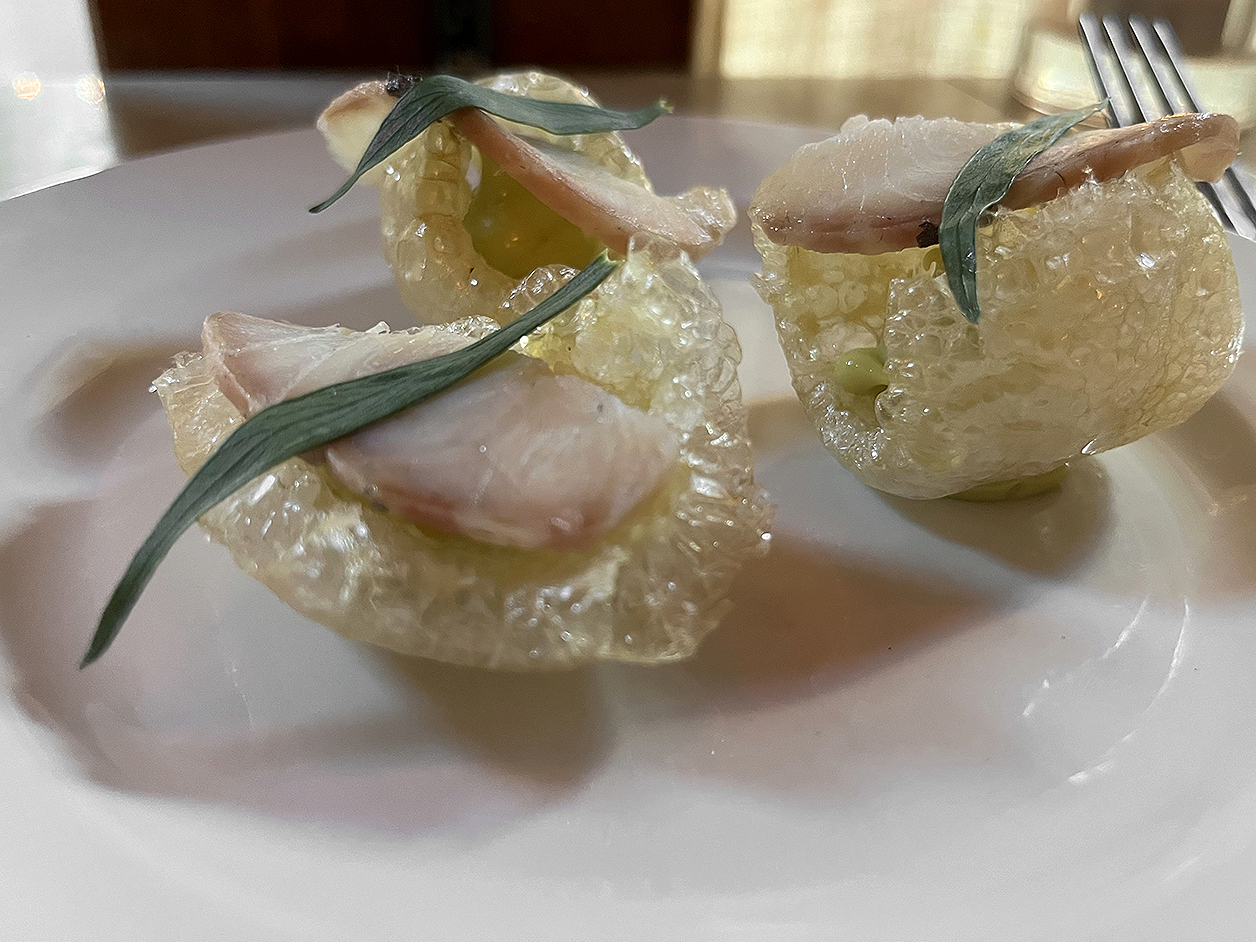
Pairing puffed pig’s skin with smoked eel is one of those combinations that sounds great on paper, only to turn out somewhat differently in the flesh. On their own the pig’s skins were perfectly enjoyable. Light and gently crisp, then pleasingly chewy, these were pork scratchings that had gone to finishing school. Unfortunately, those same qualities obscured the smokiness and saltiness of the eel. If they’re best enjoyed apart, then why bring them together in the first place?
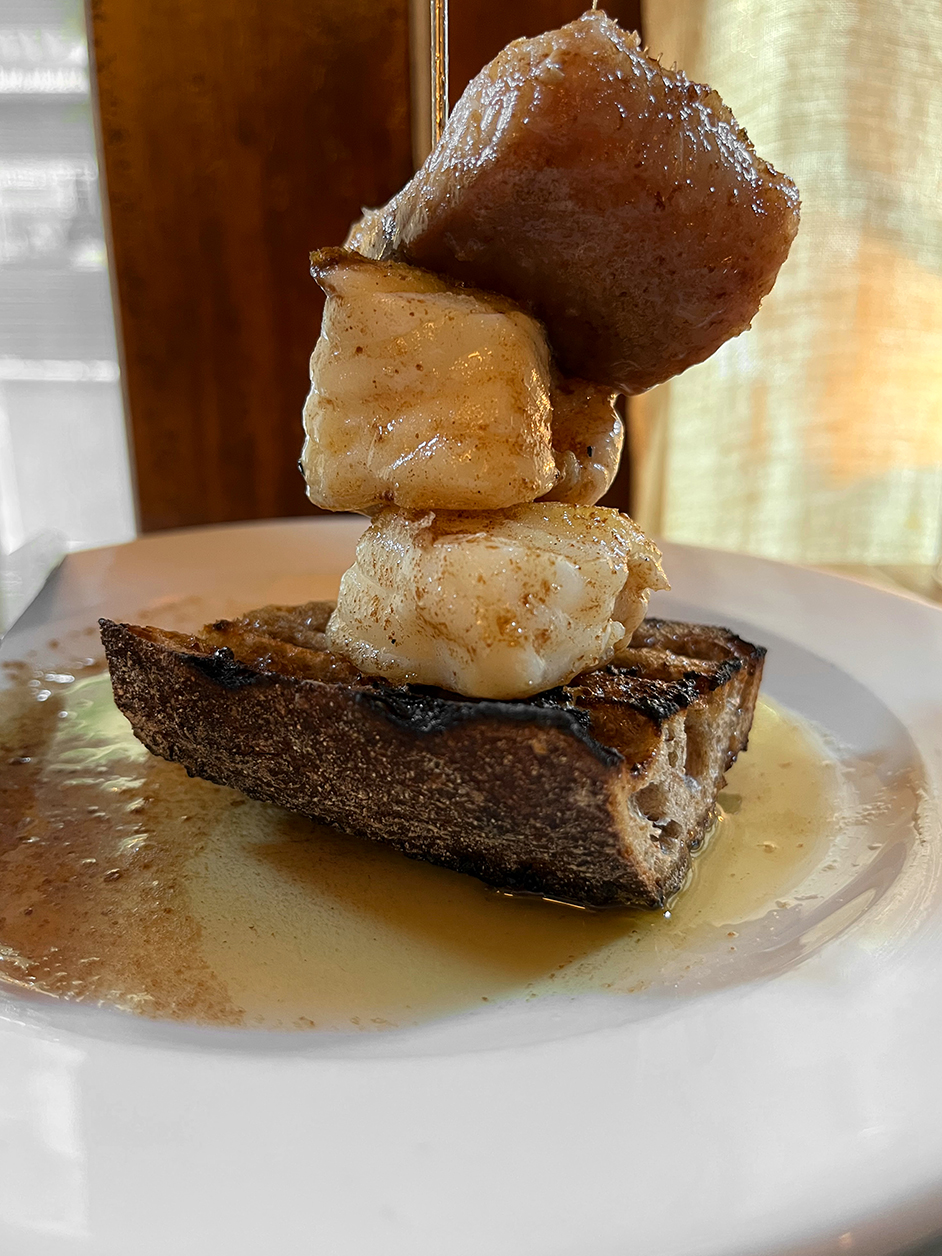
Camille’s pescatarian take on tournedos rossini replaced the steak and foie gras with monkfish and smoked eel, respectively. Crunchy, hearty and malty toast acted as a foundation and came steeped in a thin yet richly caramelised butter sauce. Straddling the toast was a chunk of firm, meaty and milky monkfish. Perched on top of that was a surprisingly generous slap of eel, soft and buttery with a salty brininess. Both monkfish and eel got along well, both with each other and with the butter sauce, but less so with the toast. The toast wasn’t large or absorbent enough to mop up all of that gloriously caramelised butter sauce; an extra order of crusty, moreish bread was required for that. Still, that was my only quibble with this sumptuous fish dish.
Dense and moreish ox hearts came skewered with delicately sweet onions. A bed of crunchy toast softened up as it soaked up the meat juices, while sharp capers and coriander cut through the meaty richness of it all.

A sticky, meaty sauce clung to firm and springy kidneys, most of which were tinged with a touch of offally funk.

The sinewy, almost crab-like texture of cod cheek was a fine conveyor for the smoky warmth of chorizo oil.

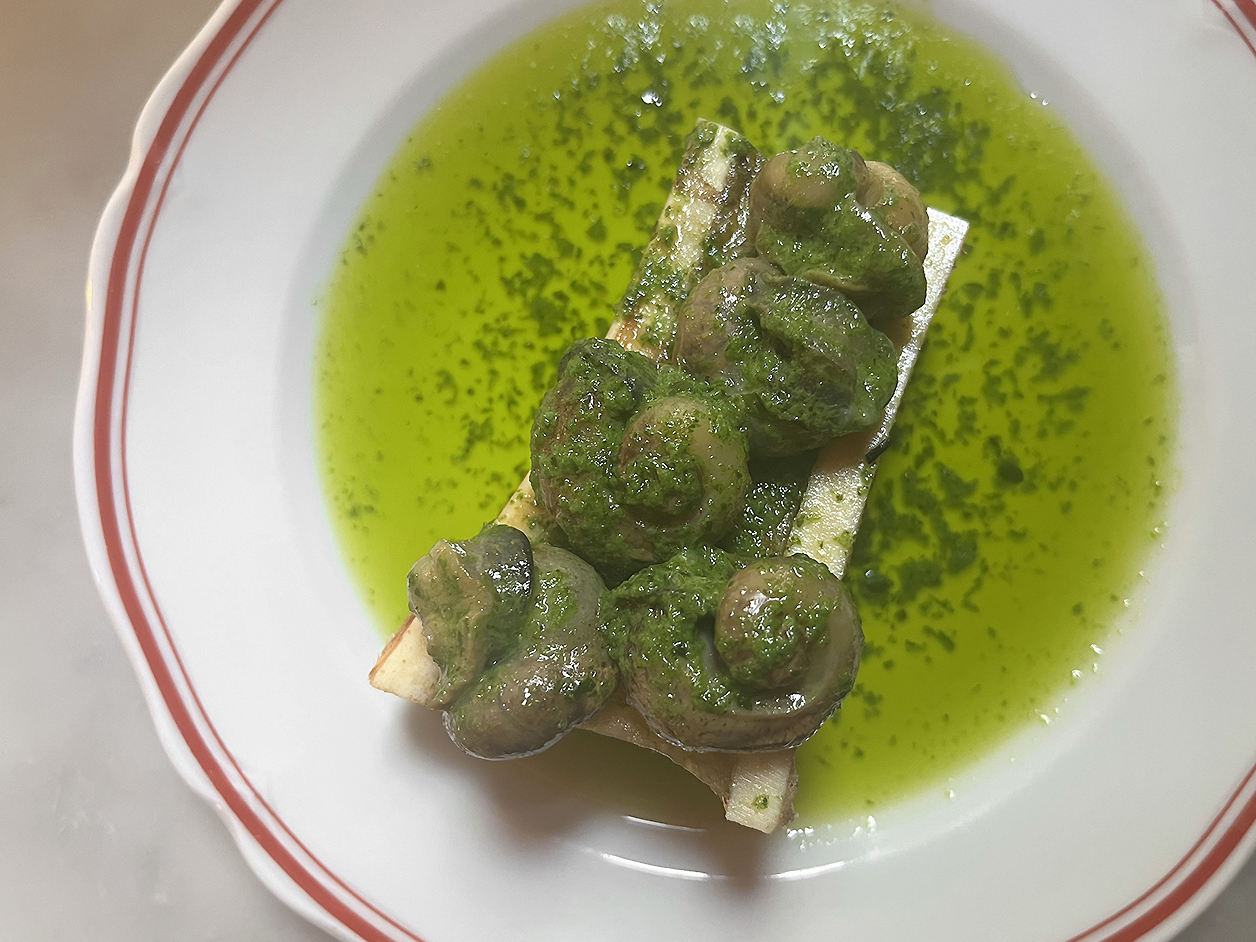
A special of snails and bone marrow was a dish of two halves. The invertebrates were firm and springy, almost resembling kidneys in the process. The bone marrow was surprisingly muted in its richness and squidginess though, with the relatively punchy garlic butter having to pick up the slack.
The octopus terrine was better than almost any octopus carpaccio I’ve ever had, if only because its thickness ensured that the meaty texture of the octopus had been better retained. A citrusy tinge was enhanced by the zesty capers and the preserved lemon.

Tripe was disappointingly soft and lacking in texture, as it had been sliced wafer thin. But the dressing almost made up for this offally disappointing turnout. The mix of espelette pepper, lovage and chevril had an astringent tang and tingly heat that resembled that of Sichuan pepper. If my attention wandered, I could almost have been eating a Chinese jellyfish salad.

A trunk of Normandy sausage was meaty, reasonably coarse and had a light suggestion of paprika (or at least some other red pepper) to it. Zesty greens helped clear the palate. It won’t set the world of sausages alight, but it was pleasant enough.

Main courses at Camille
Bouillabaisse was an oddly de- and re-constructed affair, with fish served on top of the broth, with the latter resembling a sauce more than a soup or broth. The firm and flaky gurnard separated from the bone easily, each piece possessing as much glossy henchness as a harem of bodybuilders. Curls of pig skin were charred, smoky and occasionally puffy, while mussels were briney. The broth/sauce was surprisingly tame at first, but that all changed once the meaty trio were mixed together. This immediately brought out the spine-tingling musk of saffron. While eminently enjoyable – especially given the quality of the white fish – I can’t help but think that a slightly more old-school take on bouillabaisse would’ve been even better.

Smooth and flaky lemon sole came, on the bone, in a light cream. In a tasteful and tasty touch of word play, that cream had light yet distinctive sweet tang to it, evocative of lemons. Although the slightly chewy and umami shrimp were enjoyable in their own right, they were arguably unnecessary here as they added little to the already complete and accomplished sole.

Some people think of confit meats as rather heavy, somewhat stodgy dishes, but Camille shows that this doesn’t have to be the case. Crisp, puffy skin gave way to reveal unctuously tender yet light leg meat. While the accompanying lentils were perfectly cromulent, they still felt like a crude, slovenly student next to the seductively refined duck leg.

Sliced deer had a neatly browned crust, all moreish and bouncy. The centre of each slice, cooked rare so that they retained the colour of harshly-spanked arse cheeks, was tender and slightly chewy. This yielding texture was made even more exquisite by the floral, almost honey-like sweetness of the sauce. This was neatly offset by the char, smoke and bittersweetness of stem brassicas, while asparagus had been cooked just so.

A hefty slab of mutton, cooked medium rare, would easily be a candidate for dish of the year (if I still kept a formal list of such honorifics). Dense with a deep umami, it was almost like beef. Except the fat had a crisp mantle to it, snapping apart to unleash the unctuous richness within. The eminently satisfying nature of each slice was made even better by the sticky meatiness of the thick jus. Somewhat surprisingly, the anchovies were quite tame and didn’t add much to the proceedings. They were apparently meant to accompany the sheaves of gem lettuce, but I found the green leaves were better off without the fishes. That way, they were far more effective as freshly crisp counterpoints to the rich moreishness of the mutton.

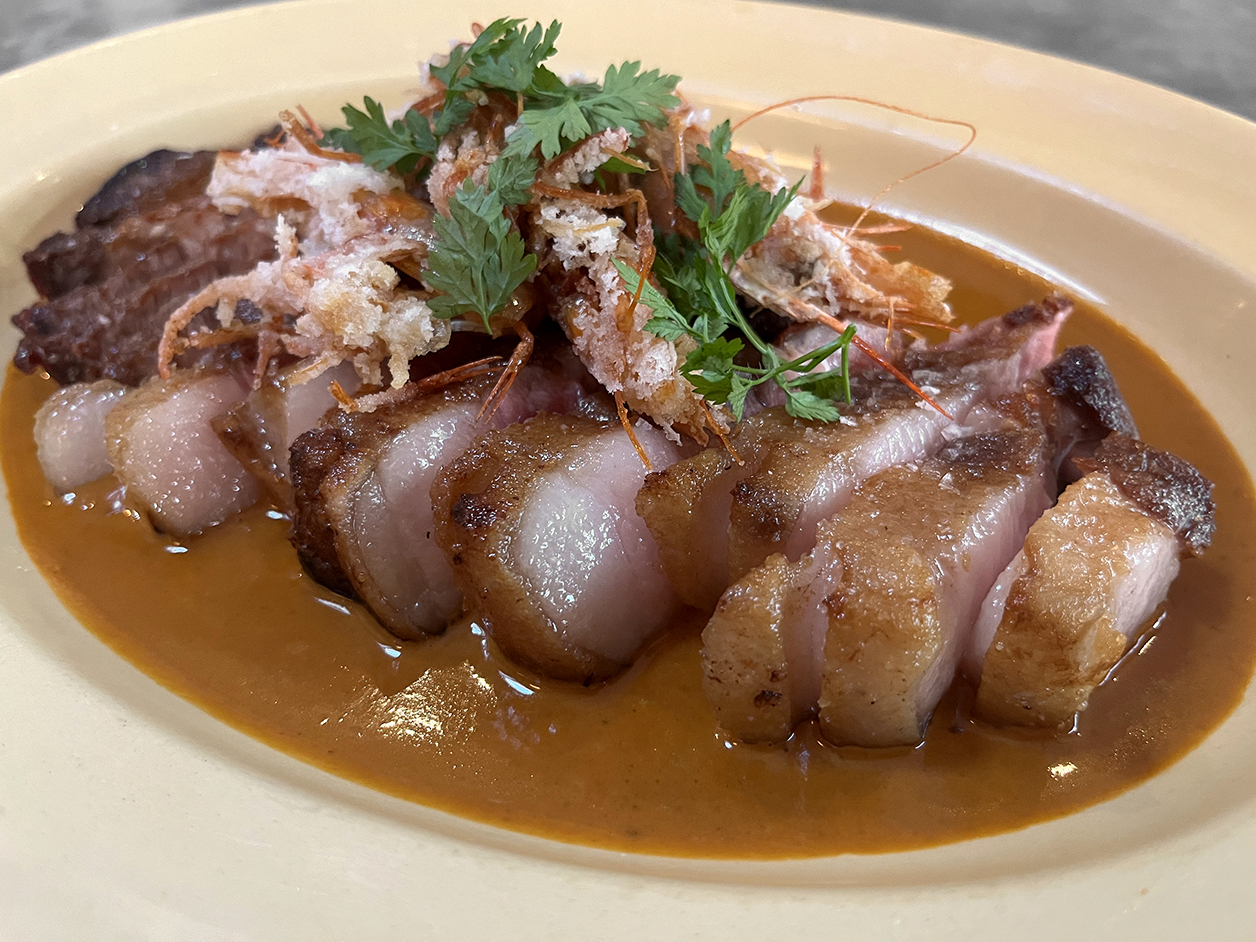
Sliced pork chop benefitted from seams of slightly chewy fat in places, which is just as well as some slices were on the dry side. The fat wasn’t alone in picking up the white meat’s slack. A sauce americaine vavavoomed with prawn heads was eminently scoopable due to its bisque-like aroma, while the extant prawn heads added crackle, crunch and funk to the proceedings.
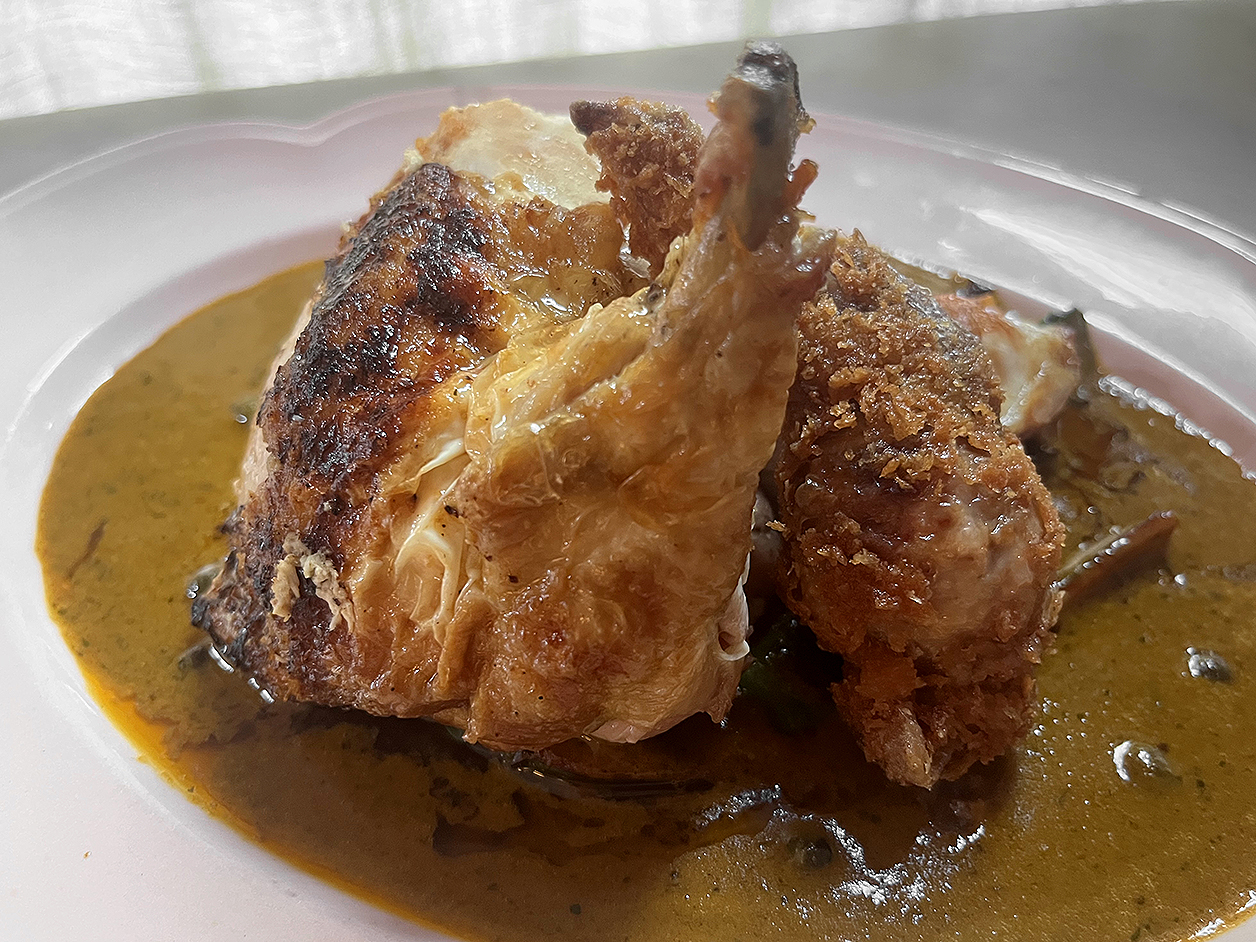
Reasonably moist chicken, clad in browned yet still supple skin, came bathed in a Cafe de Paris-style butter sauce. The overall effect was, unfortunately, that of Coronation chicken.
Desserts at Camille
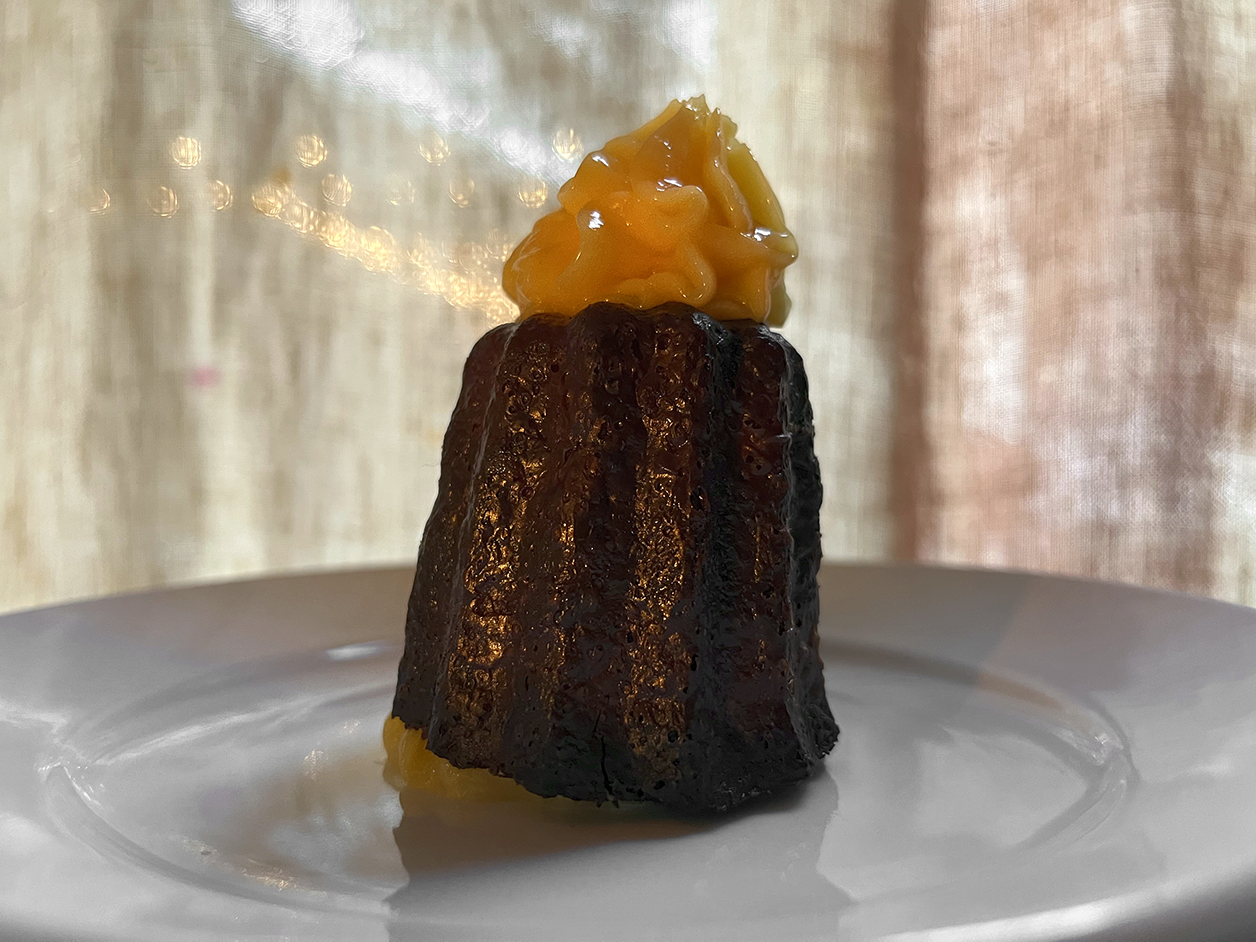
The small size of the firm canele inevitably meant that the amount of lemon curd inside was scanty. I also wished for a sharper sense of zesty astringency.
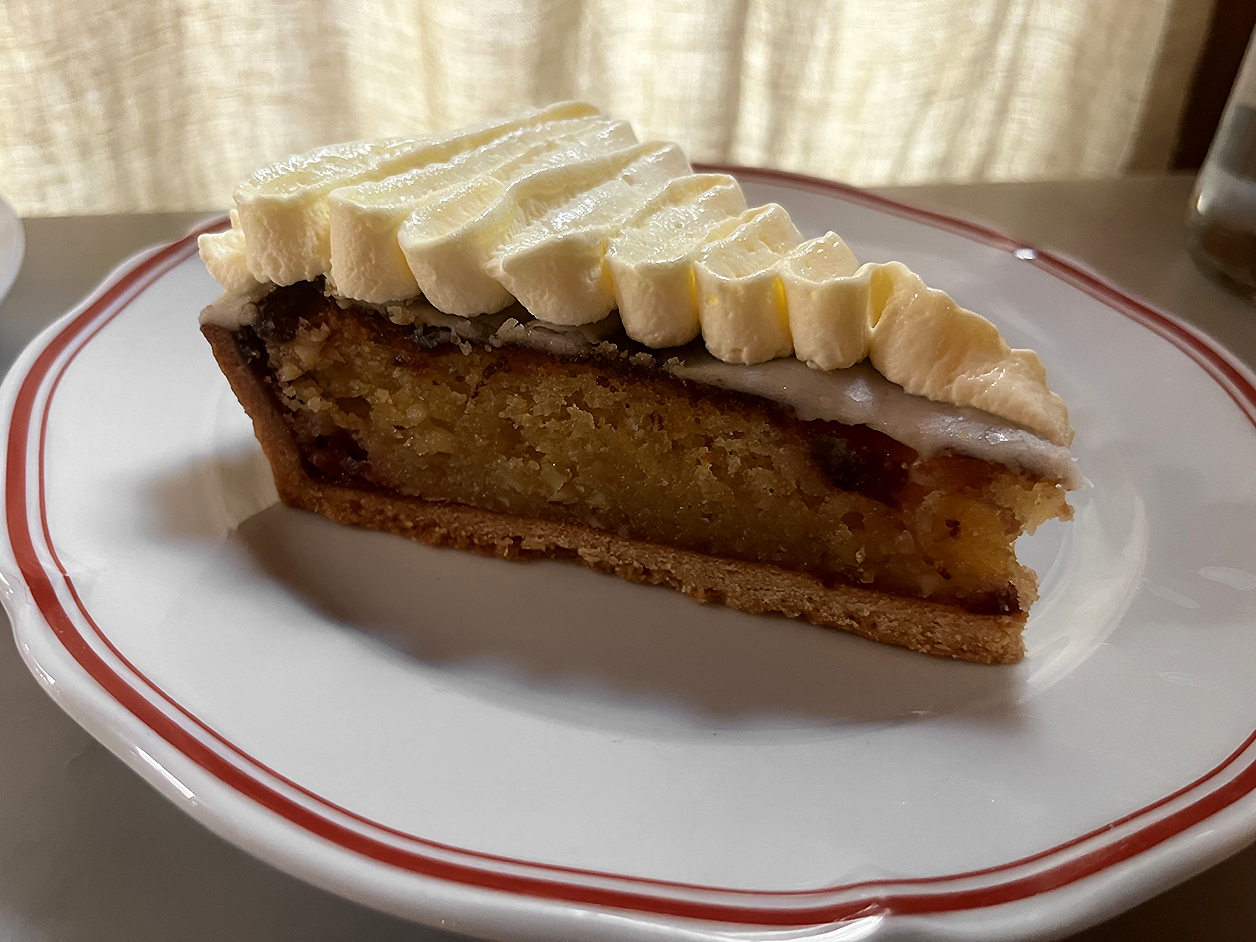
Despite the inconsistent breakability of the pastry, the walnut tart was an enjoyable confection. The filling captured the distinctive taste of walnuts, while also possessing a surprisingly restrained demerara-esque sweetness that never overwhelmed the nuttiness. A light and refreshing sense of tartness, possibly derived from butterscotch, rounded off this understated yet generally pleasing dessert.

Camille’s raspberry tart had jam tart-vibes, but this was not a tawdry effort from Mr Kipling or Cafe Francois. Tightly crumbed yet pliably breakable pastry came filled with a sugary sweet filling that was reasonably evocative of the fruit.
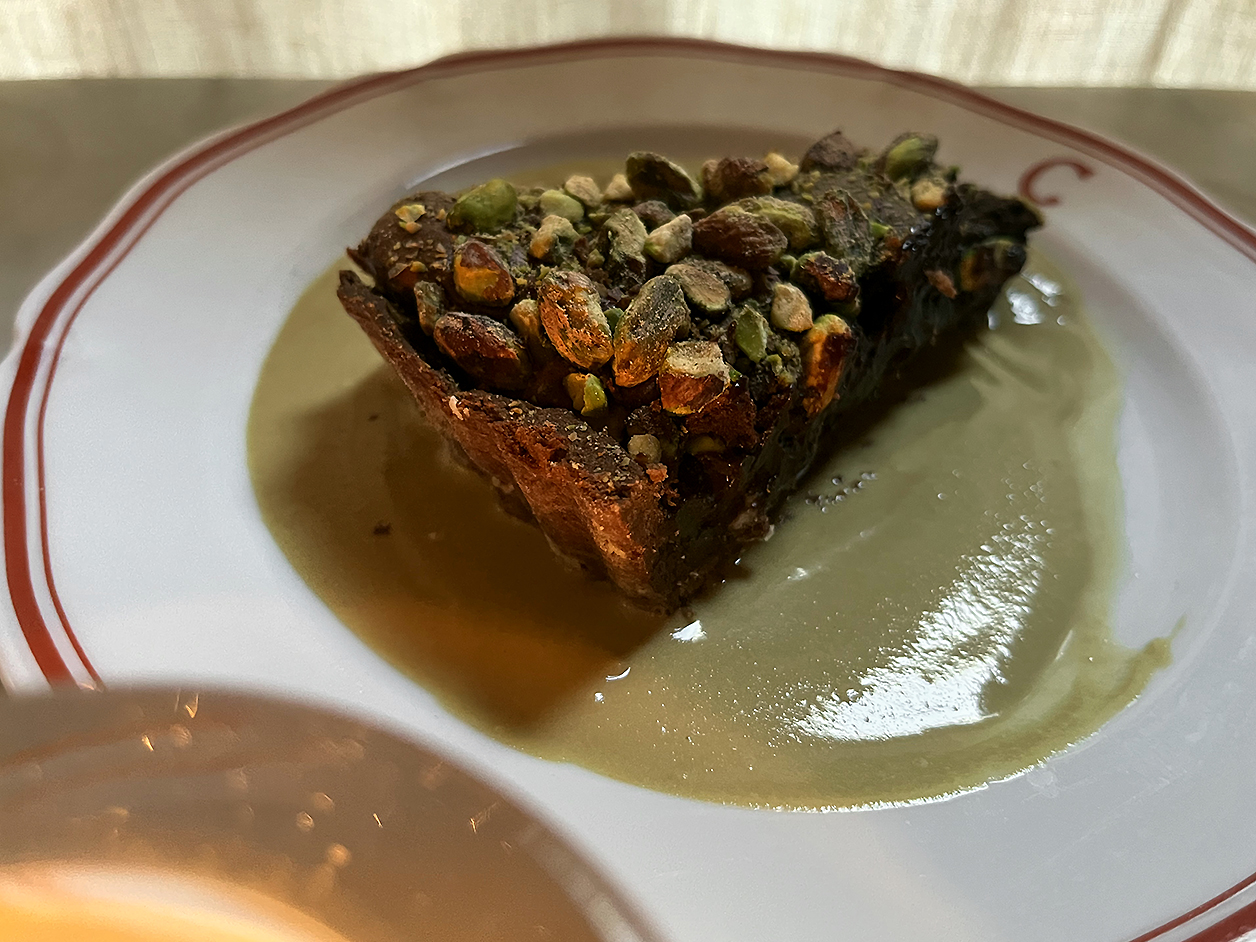
The pastry of the chocolate and pistachio tart was sturdy, arguably too much so, taking a bit more force to break apart than that of the raspberry tart. There were hints of bittersweetness in the chunky chocolate filling, but not enough. There were hints of pistachio in the cream, but it wasn’t nearly evocative enough. I usually get all hot and bothered by the mere thought of combining chocolate and pistachio together. This attempt, however, left me cold.
Camille occasionally serves up some quirkily-flavoured ice creams, with varying levels of success. Thyme was too subtle for its own good, while artichoke had a delicate sweetness and a quality that was almost kinda sorta like salted caramel.
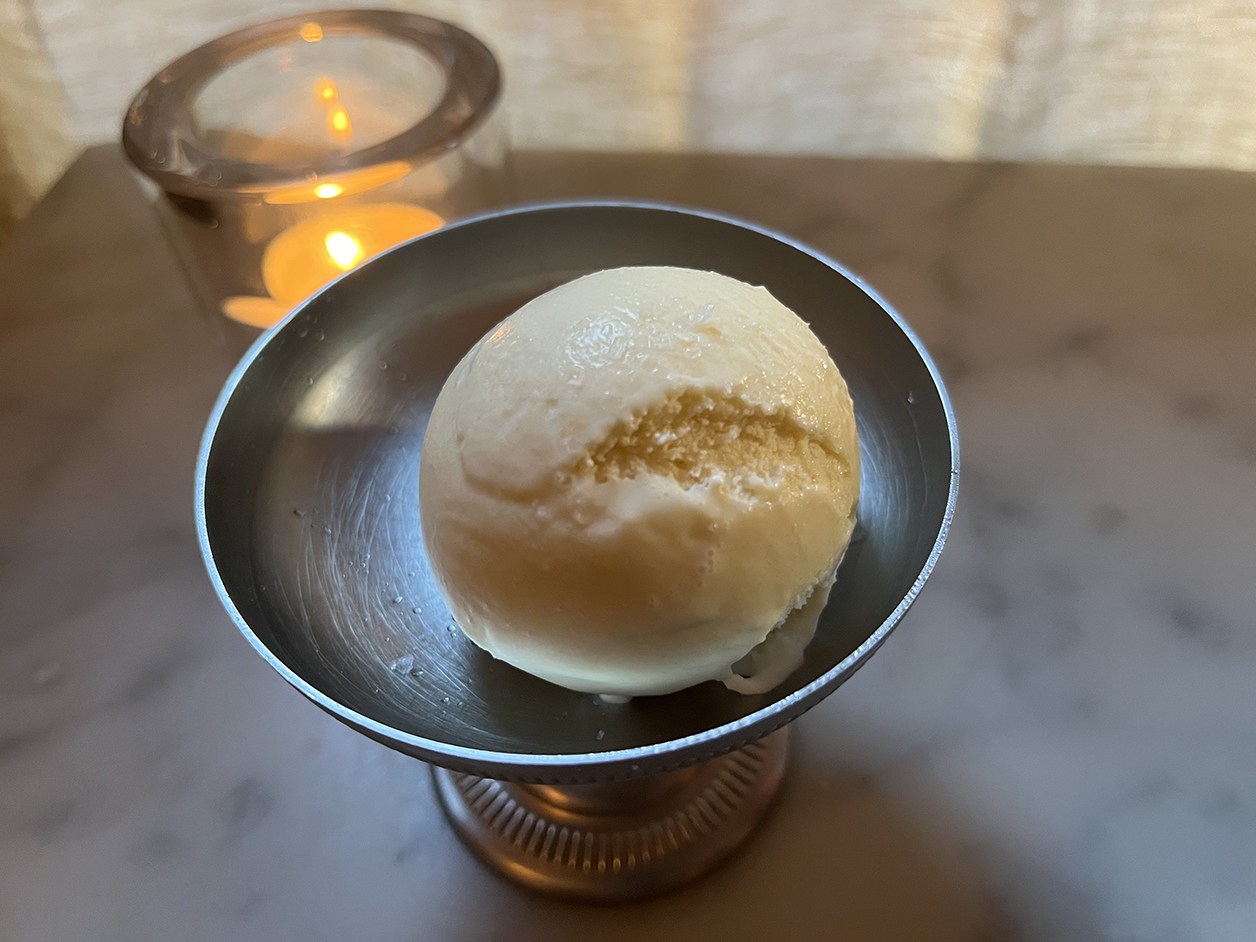

It was odd to have the astringent tang of reblochon in an ice cream. Its enjoyability was bolstered further by the sweet, chewy honeycomb and biscuit. It wouldn’t be my first pick for refreshment during a pavement-melting heatwave, but it’d be a fine dessert at any other time of year.

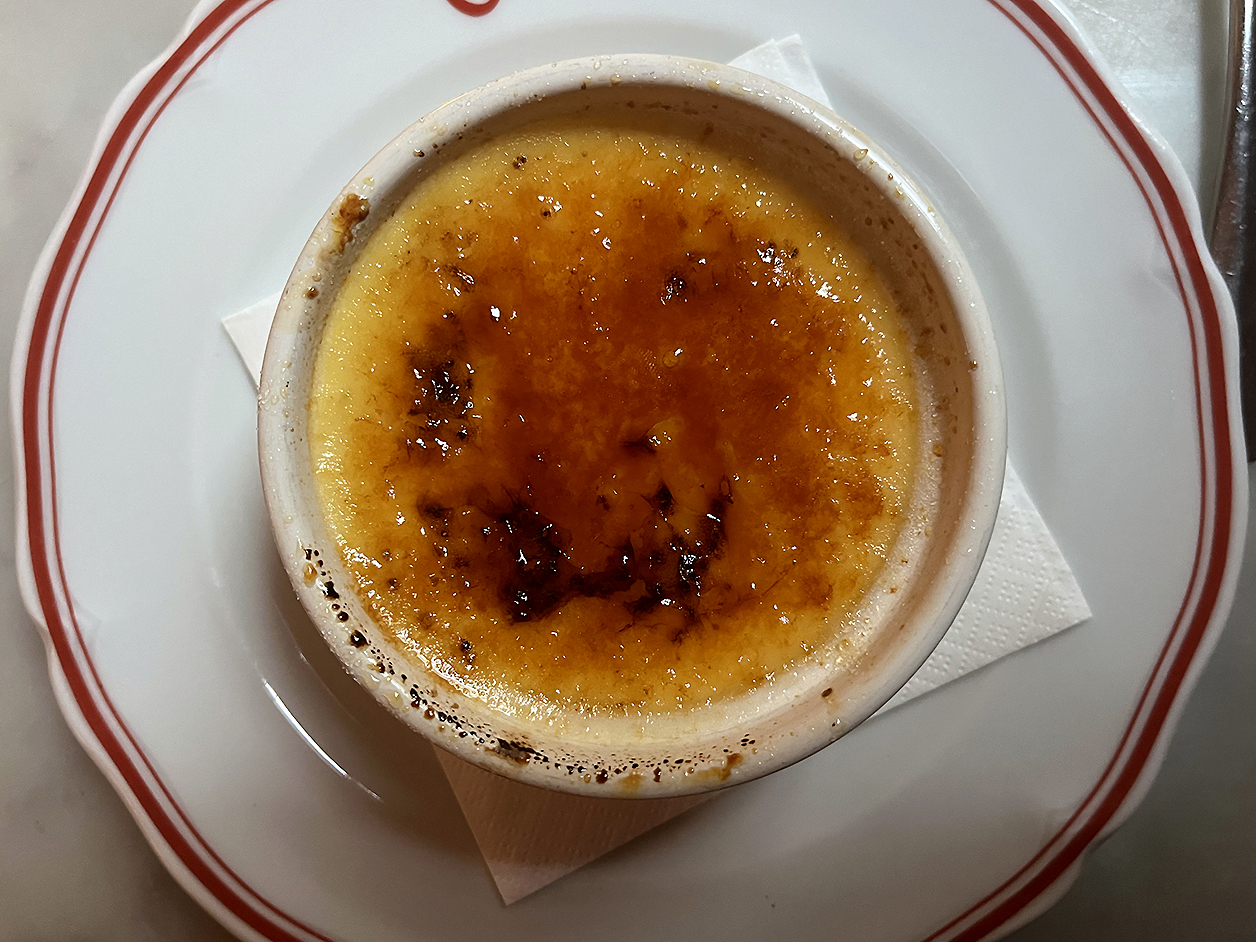
Creme brulee made with goat’s milk wasn’t that different from the usual cow’s milk variety. There was perhaps a touch of earthiness and extra thickness to the creme, but only a touch. It was nonetheless an exemplar of its kind – the crisp, chewy mantle resting upon a sweet, milky and occasionally thick creme.
The Verdict
As a French-ish restaurant, it’d be tempting to judge Camille primarily on its versions of classic French dishes. And while those dishes, from the tournedos rossini and bouillabaisse to confit duck and creme brulee, can be deliciously accomplished, to do so would be to overlook Camille’s many other charms and strengths.
While Camille doesn’t really adhere to the classic pantheon of French mother sauces, it is nonetheless – for the most part – highly adept in making lip-smacking creams, reductions, broths, sauces and whatever the plural of jus is and then pairing them with suitable proteins for maximum effect. For example, I don’t know where Camille’s particular affection for prawn heads is going, but I’m highly appreciative of this particular crustacean-based condiment fixation so far.
The kitchen’s skill in bringing out the best of fish, gamier meats (such as mutton and venison) and, to a somewhat lesser extent, offal was also a significant highlight. If you, like the stereotype of the risk-averse and fussy Little Englander eater, are averse to such things, then you’re truly missing out.
The weakest part of Camille’s ever-changing menu was the desserts, a disappointingly consistent turn of events, although not to the same crippling extent as its larger neighbour, Cafe Francois. Given the relatively constrained size of their kitchen, their options for addressing this might be somewhat limited.
There’s a hoary old saying about how the UK and the US are divided by a shared language. The UK and France are certainly divided by very different attitudes towards food, but Camille shows that there can be a happy culinary crossover between the two. Whether one thinks of Camille’s offerings as British-accented French food or French-accented British food, what is certain is that its deliciousness emerges from a certain verve and panache in the kitchen. All of which are sorely lacking in their bigger, more brassy neighbour. If ‘Camille’ isn’t French for ‘delectable’, then it bloody well should be.
Name: Camille
Address: 2-3 Stoney Street, Borough Market, London SE1 9AA
Phone: 020 3794 8958
Web: https://www.camillerestaurant.co.uk
Opening Hours: Monday 17.30-22.00. Tuesday-Saturday noon-15.00 and 17.30-22:00. Sunday noon-17.00.
Reservations: essential.
Average cost for one person including service: £100 approx.
Rating: ★★★★☆
 The Picky Glutton