A jack of all trades and a master of fun
It is a truth universally acknowledged that pan-Asian restaurants are, generally speaking, a bit pants. Serving a grab bag of dishes from half-a-dozen (or more) disparate linguistic groups and culinary traditions, linked together only by rice and a proprietor’s gap year travels or perhaps a marketing consultant’s PowerPoint slide, is usually a recipe for mediocrity. The type of mediocrity only acceptable to the easily pleased and simple minded.
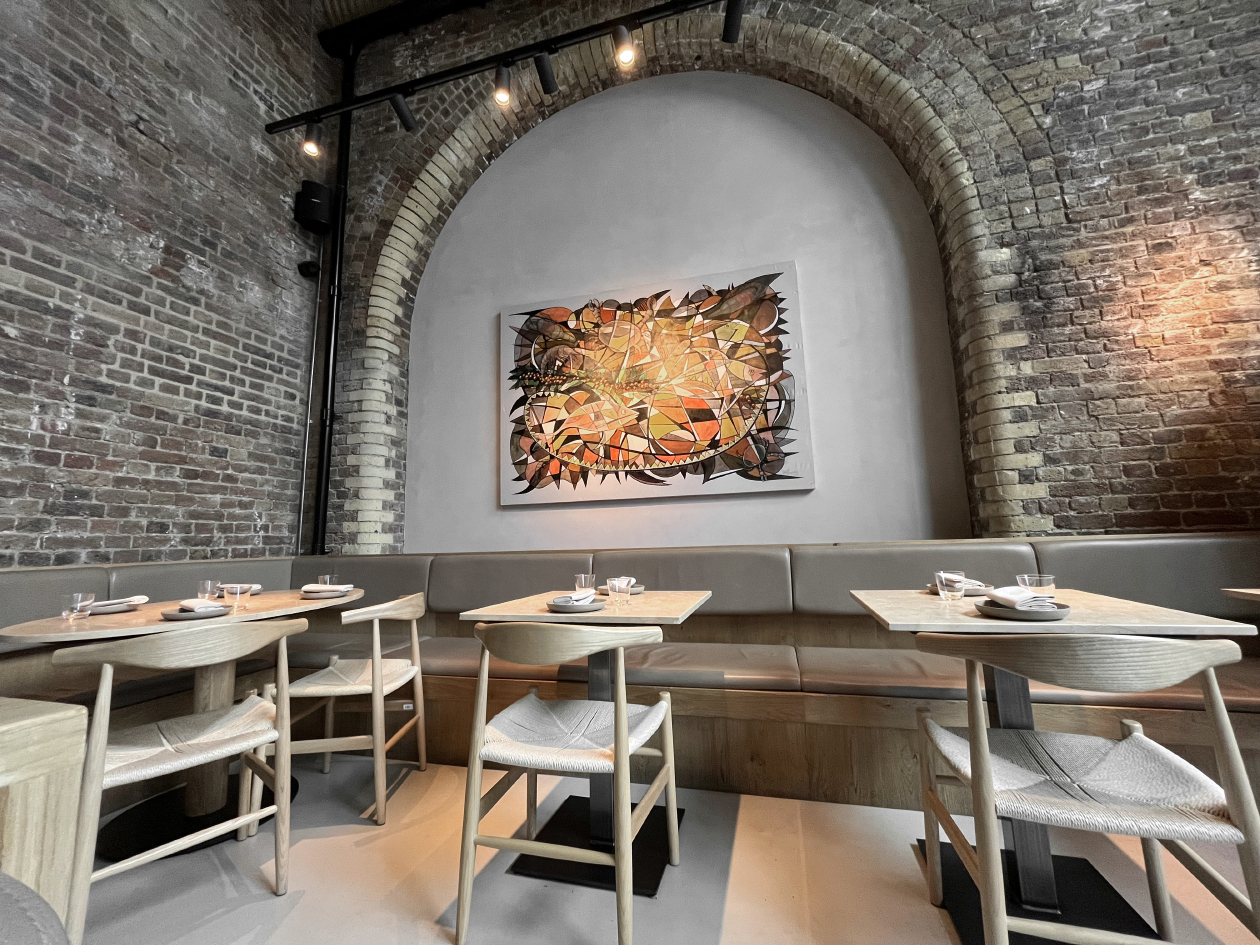
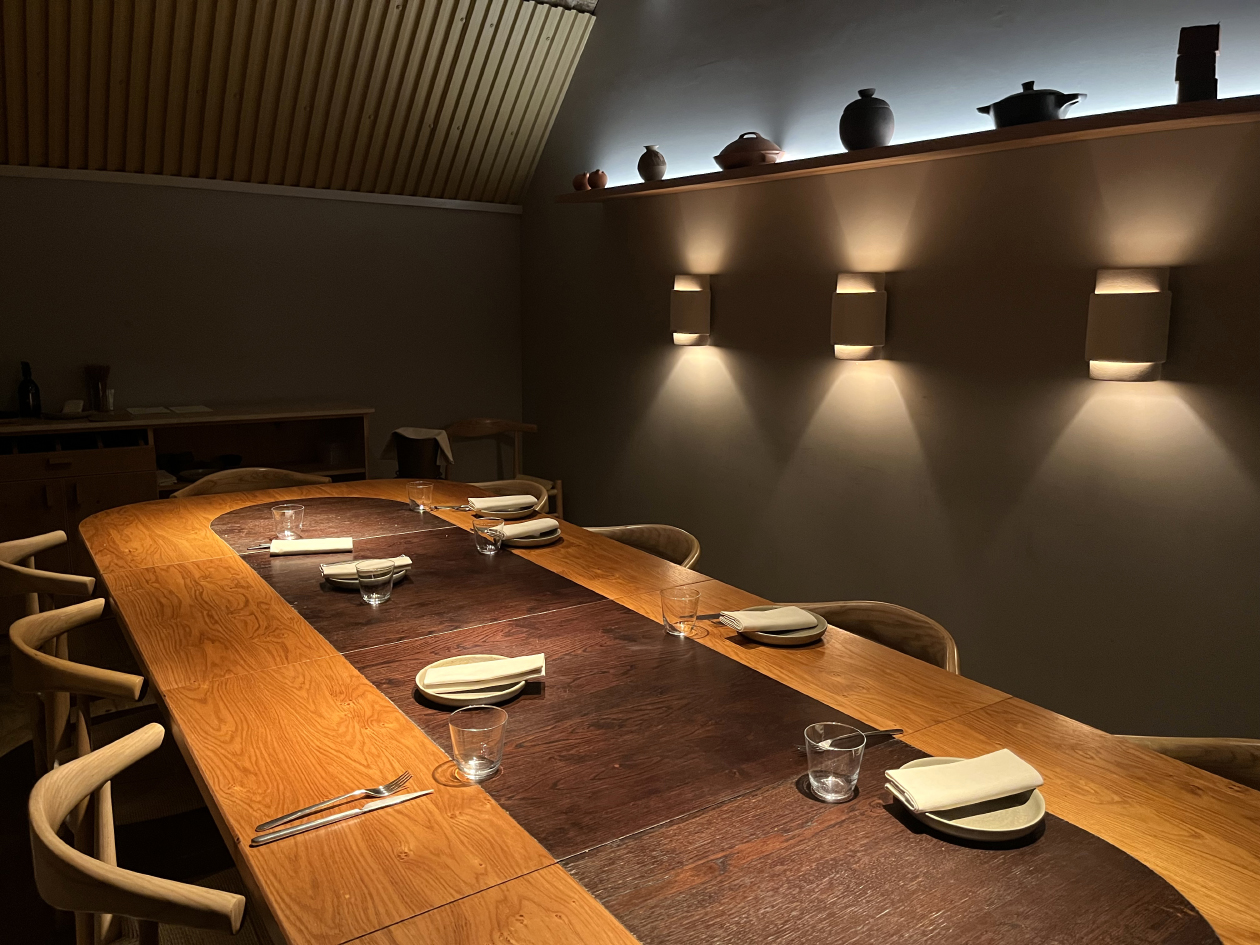
By much of that logic, Akara should be an absolute non-starter with a pan-West African menu that takes in influences and ingredients from Nigeria, Benin and Senegal, among others, and even Brazil. But somehow, with only a few exceptions, it works. It really works.
Small plates and side dishes at Akara
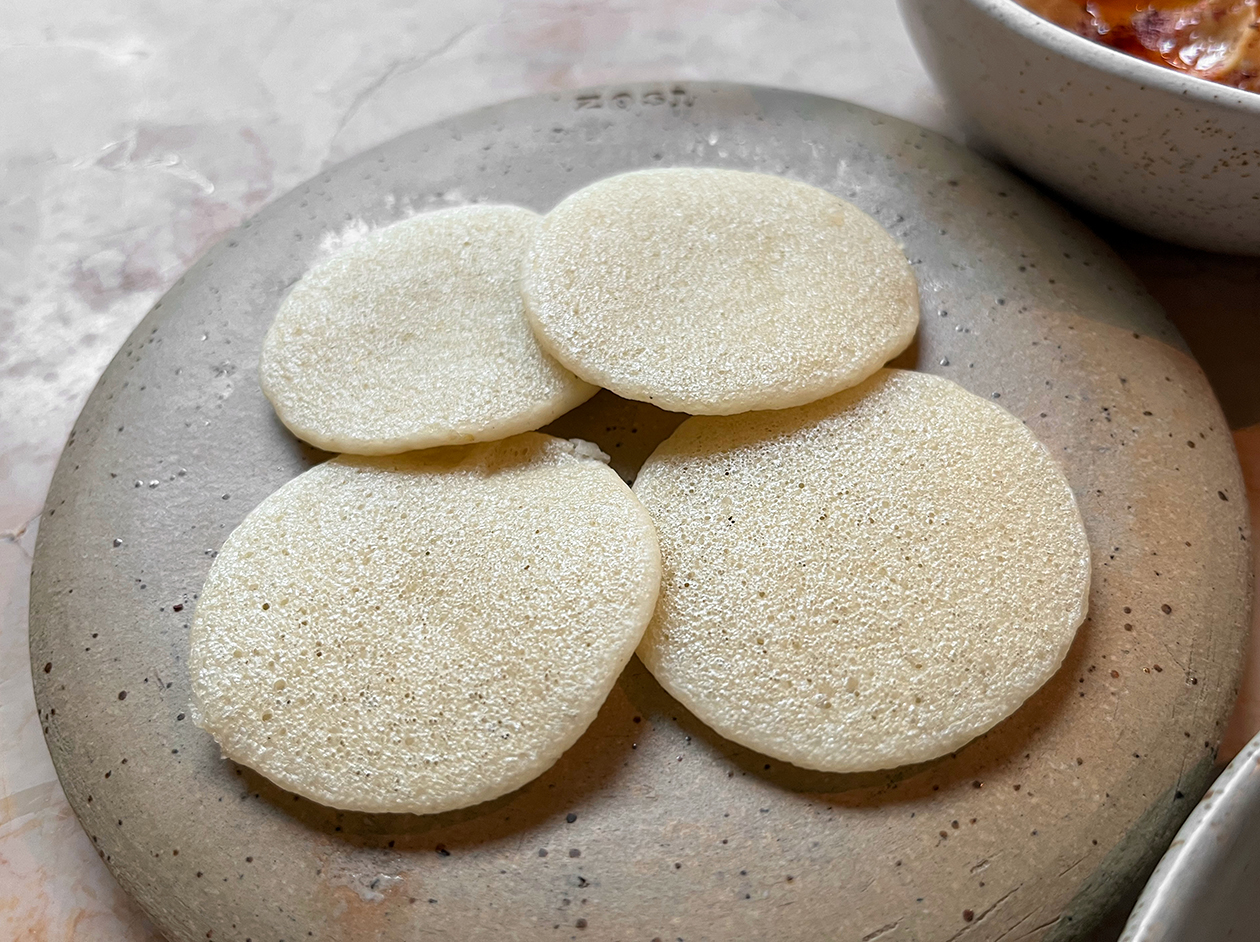
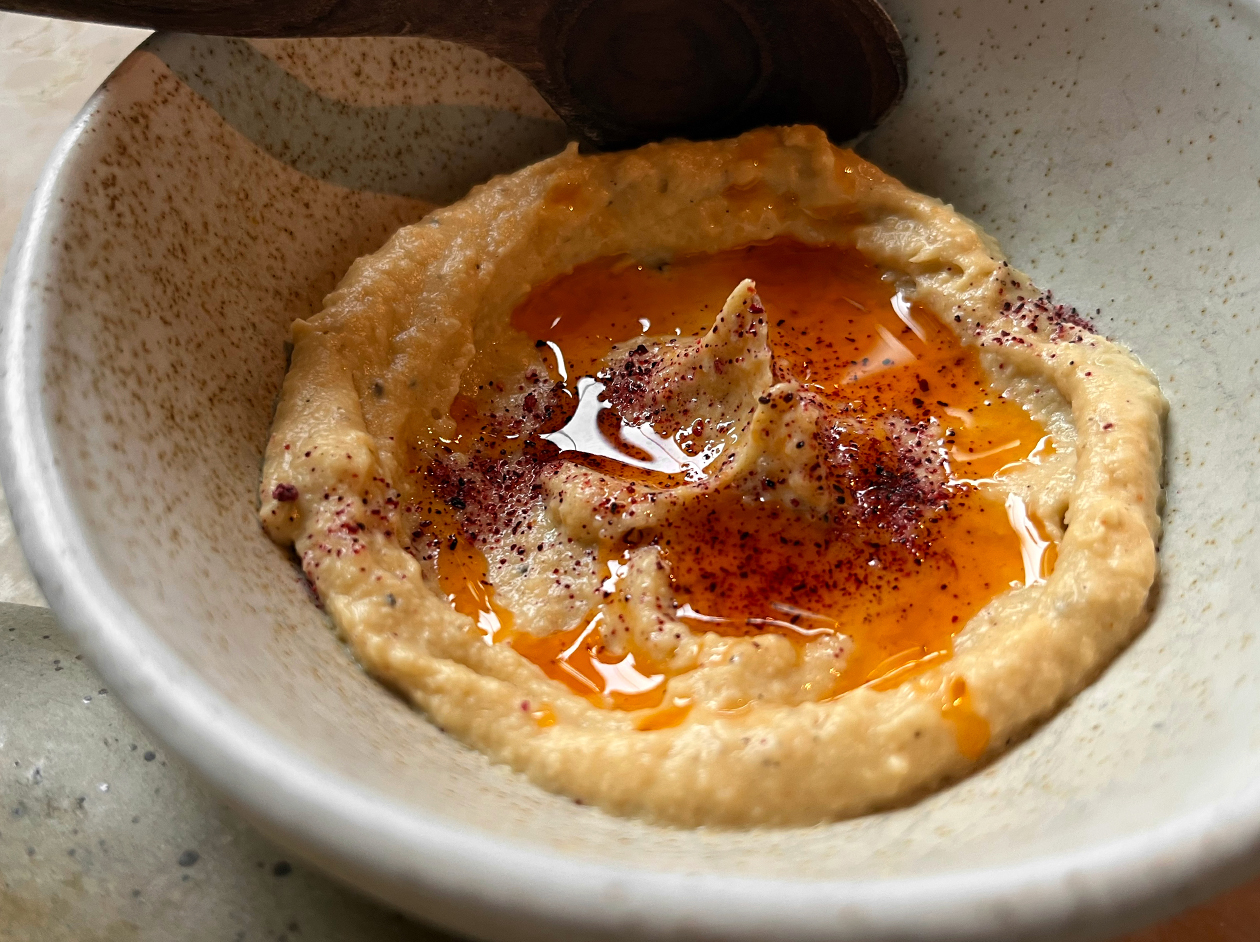
Sinasir rice pancakes tasted, perhaps unsurprisingly, a lot like gua bao. They were arguably too soft for scooping up the gently nutty and moreish black bean hummus. But their fluffiness and gentle chewiness shouldn’t be sniffed at, so just spoon said hummus onto them instead.
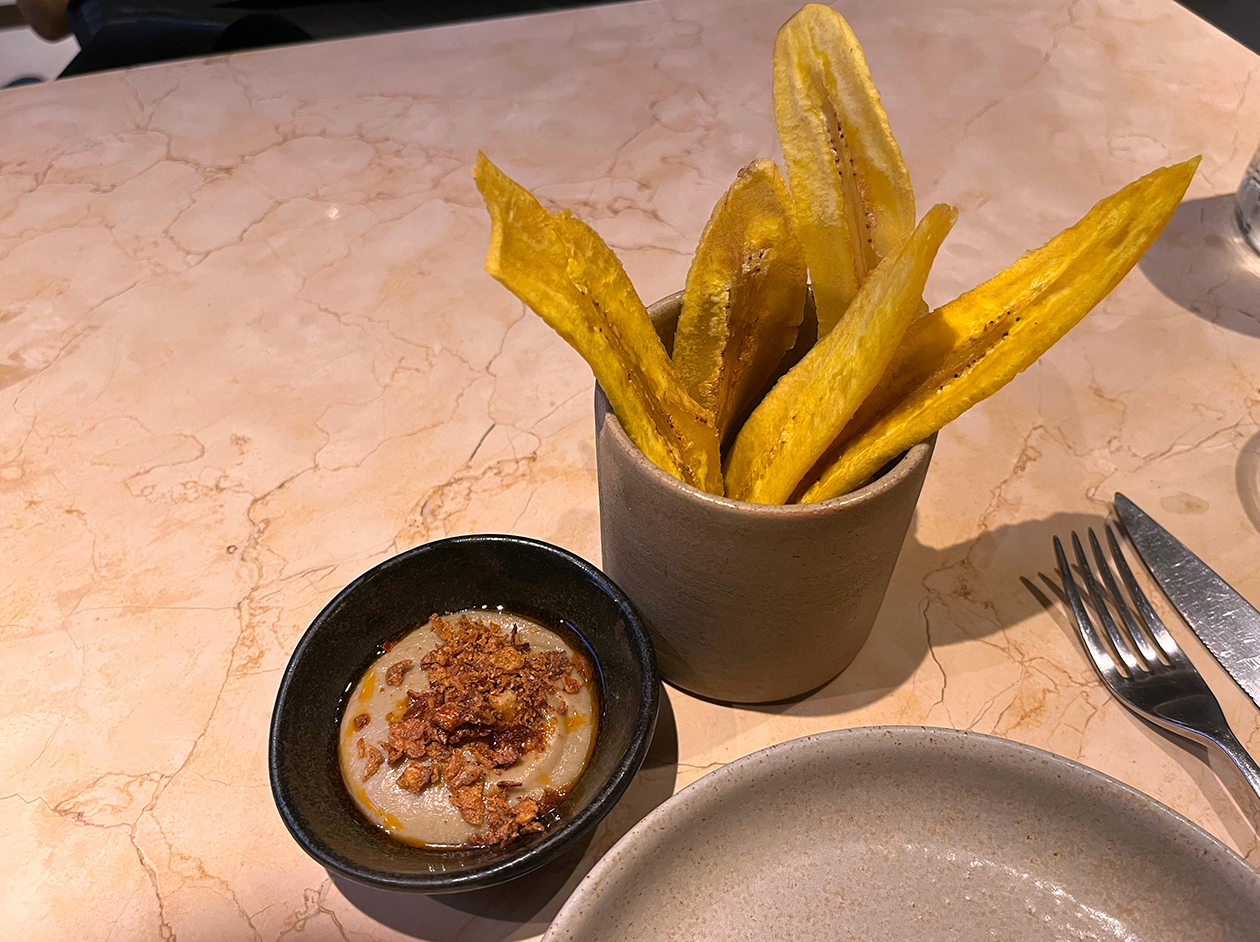
Green plantain chips, crunchy and somewhat thick, unsurprisingly had a slight sweetness to them. The accompanying aubergine yassa was somewhat similar to a baba ghanoush, but more creamy than fleshy, and came topped with a spice mix that imparted a tingly warmth. Despite their modest sweetness, the crunch of the plantain chips made them ill-suited for scooping up and appreciating the yassa, as it obscured the eggplant’s qualities.
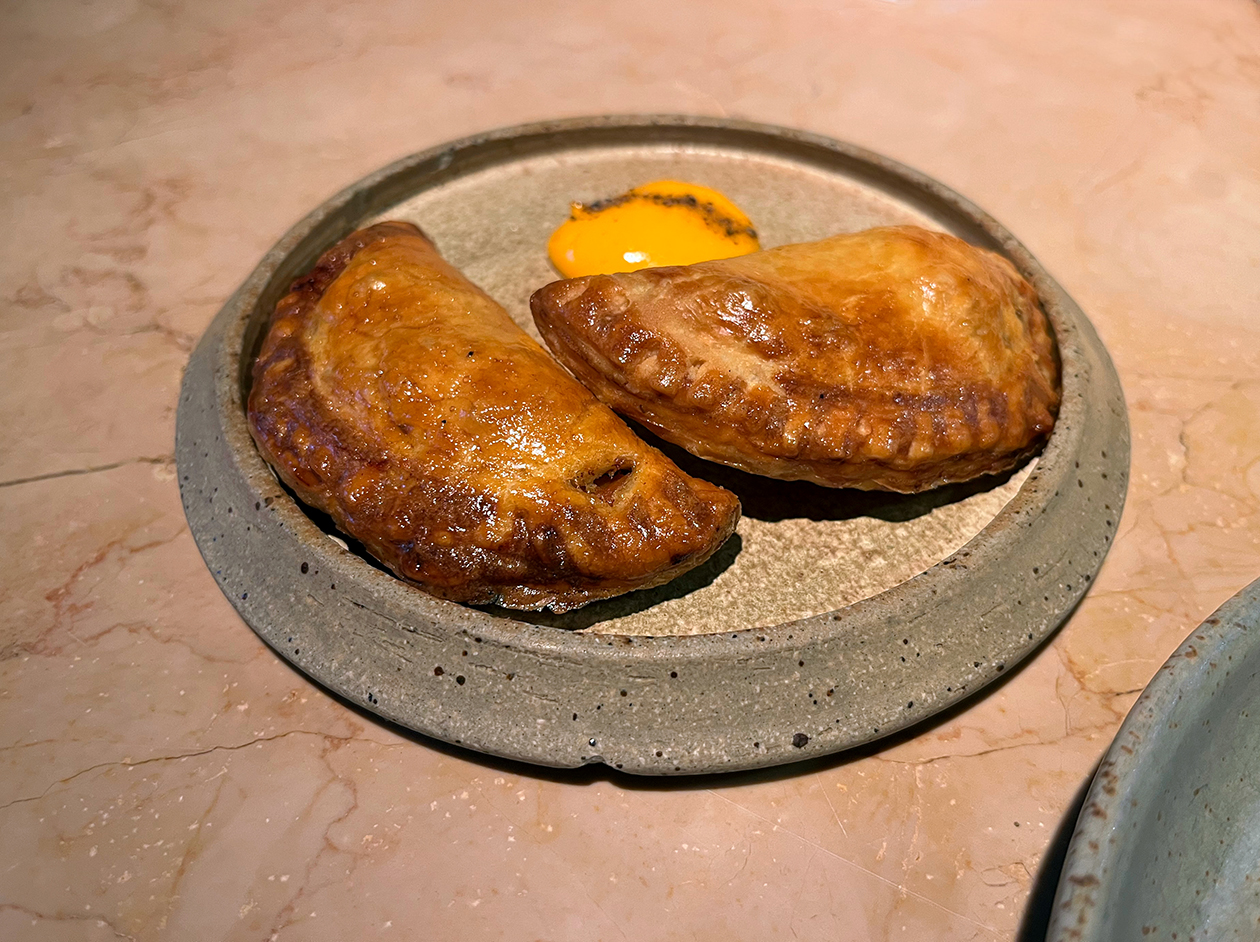
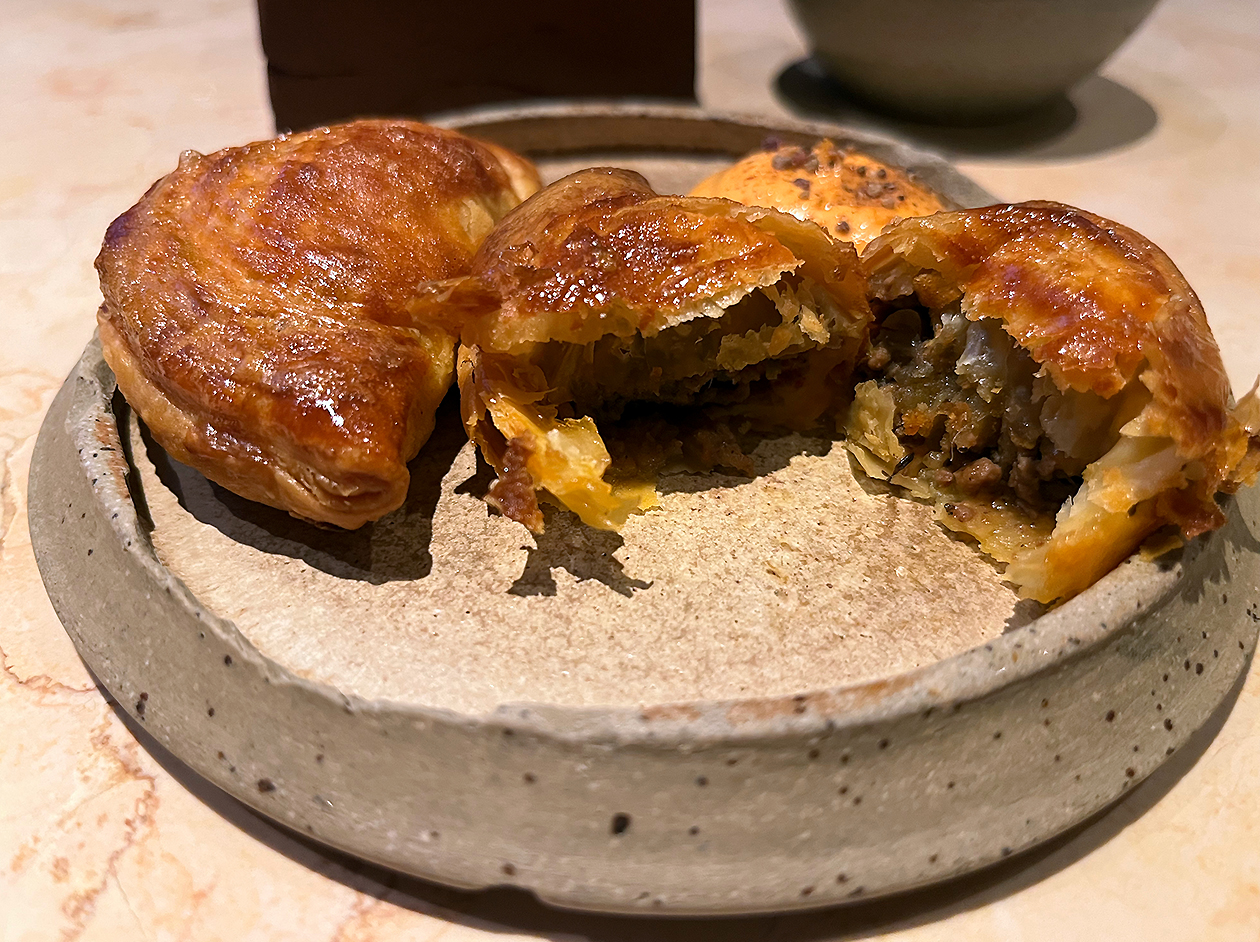
Empanada-like fattaya had flaky, buttery pastry that would put many pasties across the country to shame. Filled with minced beef and veg, this moreish filling was enhanced by the creamy umami of the ata din din emulsion – a cunning use of the fried pepper sauce more often used as a base for egusi stews.
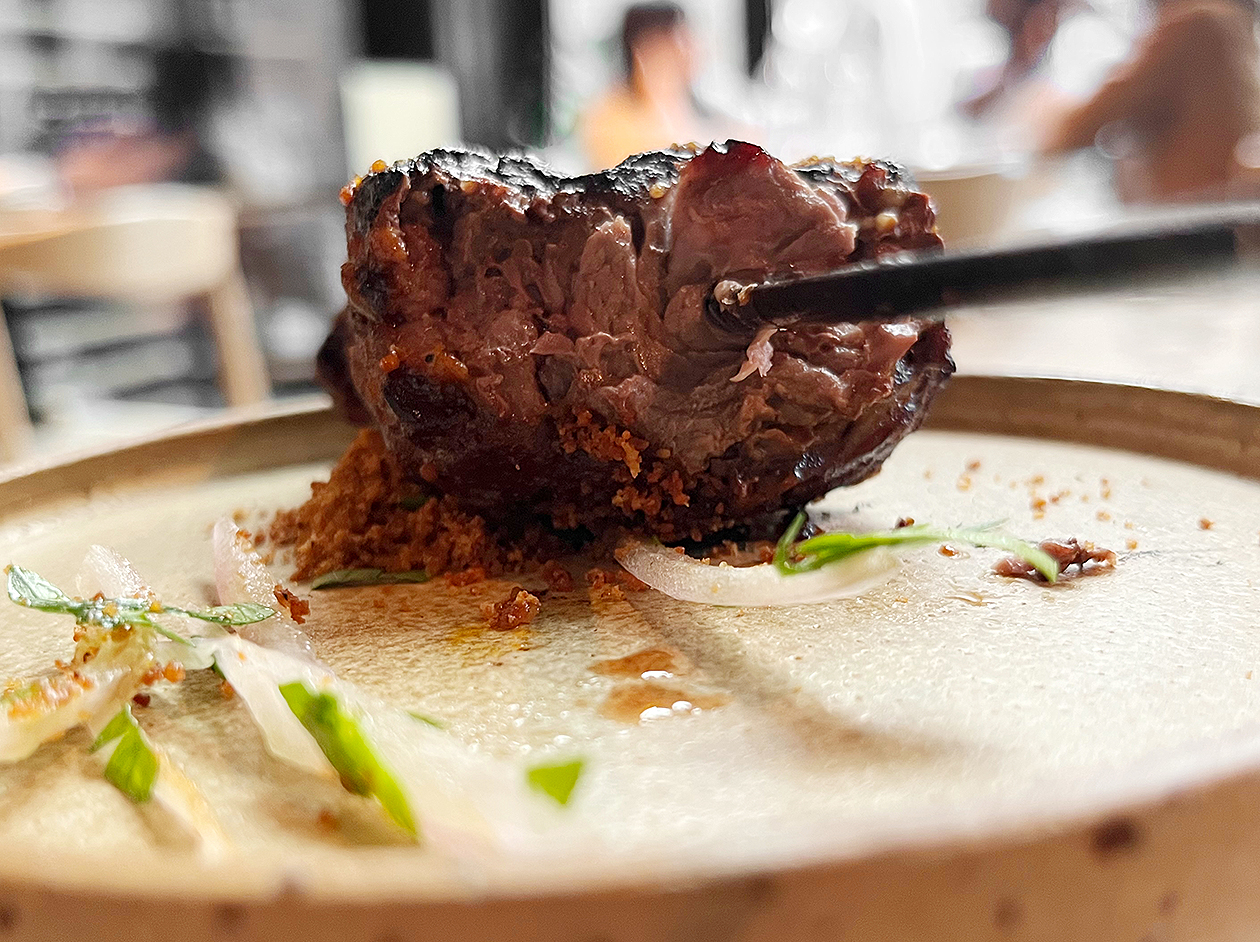
Beef kulikuli was charred on the outside. Unfortunately, each beefy bite was also heavily charred on the inside too. Even the accompanying onions were overcooked, while the yaji was anaemic – especially when compared to the more robustly spiced version available from Alhaji Suya.
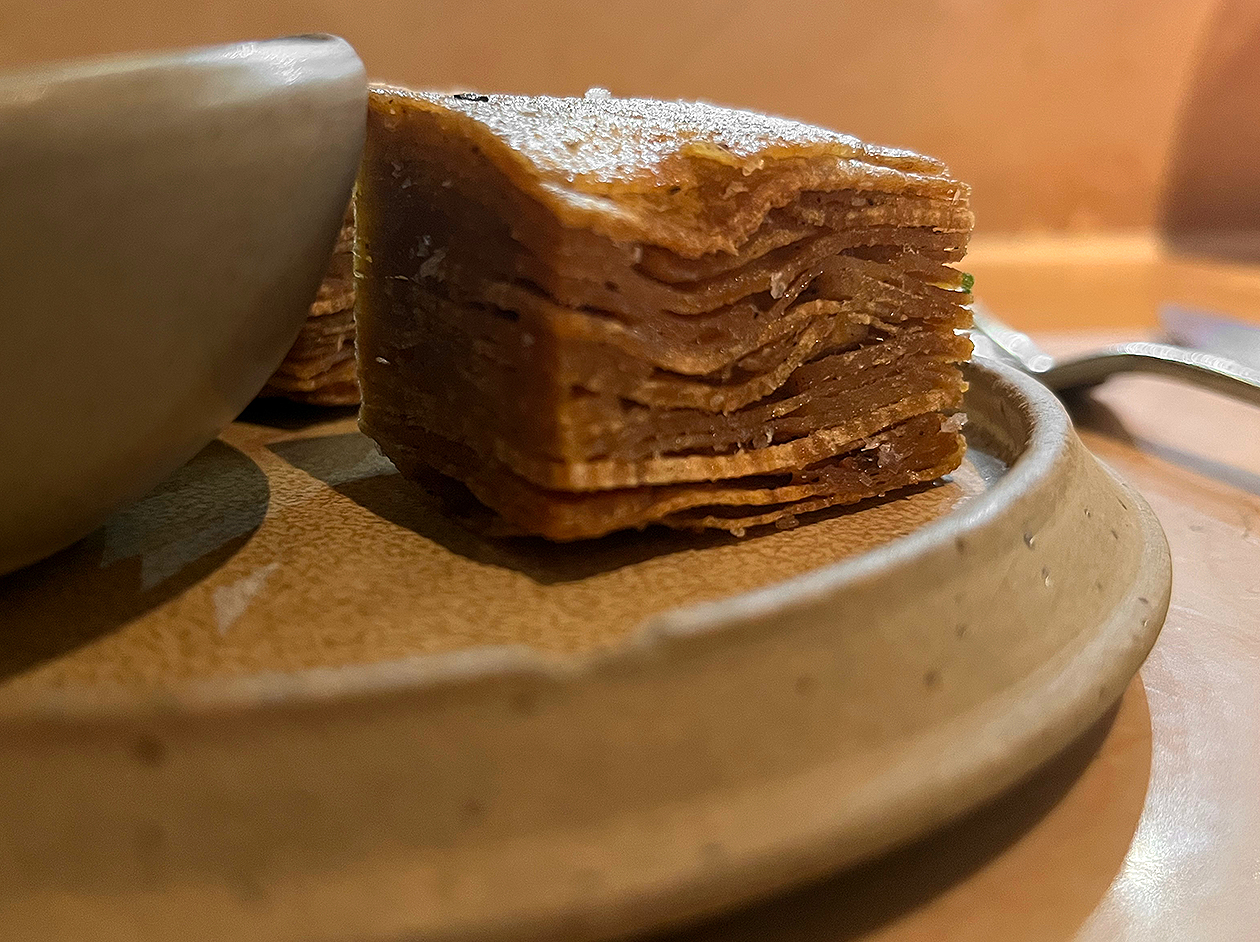
Pressed yam turned out to be Akara’s version of the confit potatoes made famous by the Quality Chop House and homaged elsewhere. Sheaves of firm, nutty carbs stacked on top of one another all had a golden lustre, courtesy of deep frying, yet were still free of excess grease. The accompanying green shito was lighter and more sprightly than the red-hued variants I’m more familiar with, but it still added a spicy warmth to the yam stack.
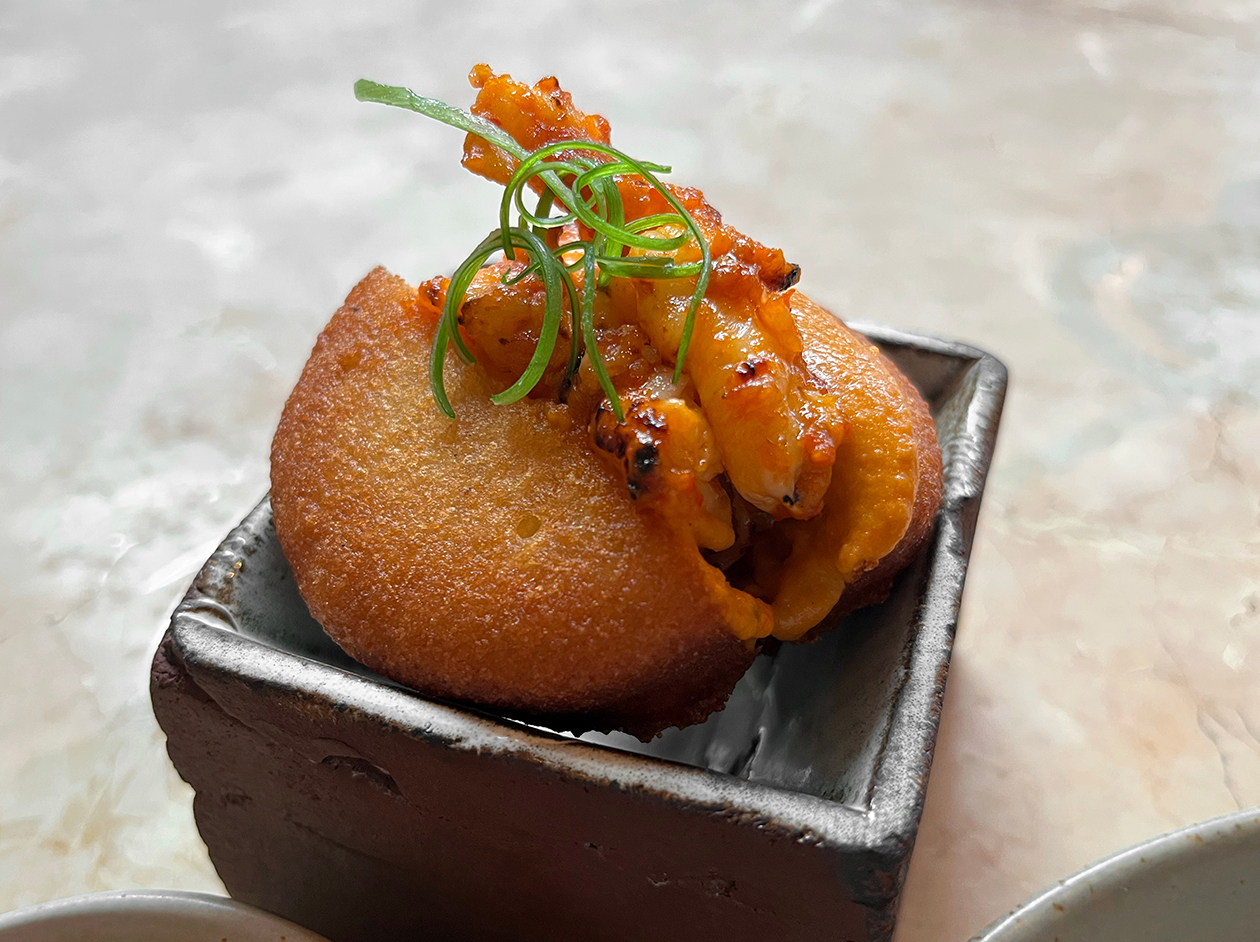
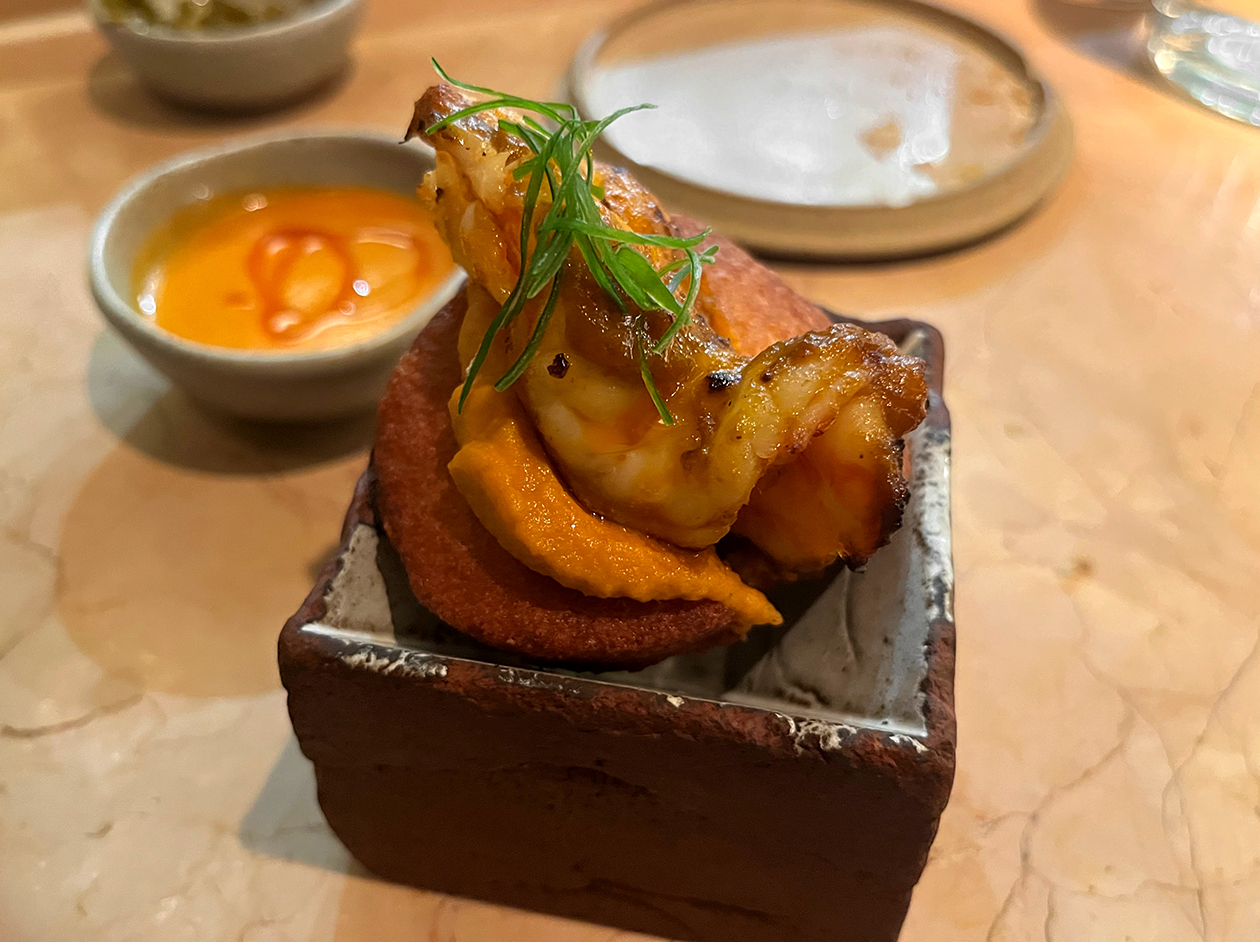
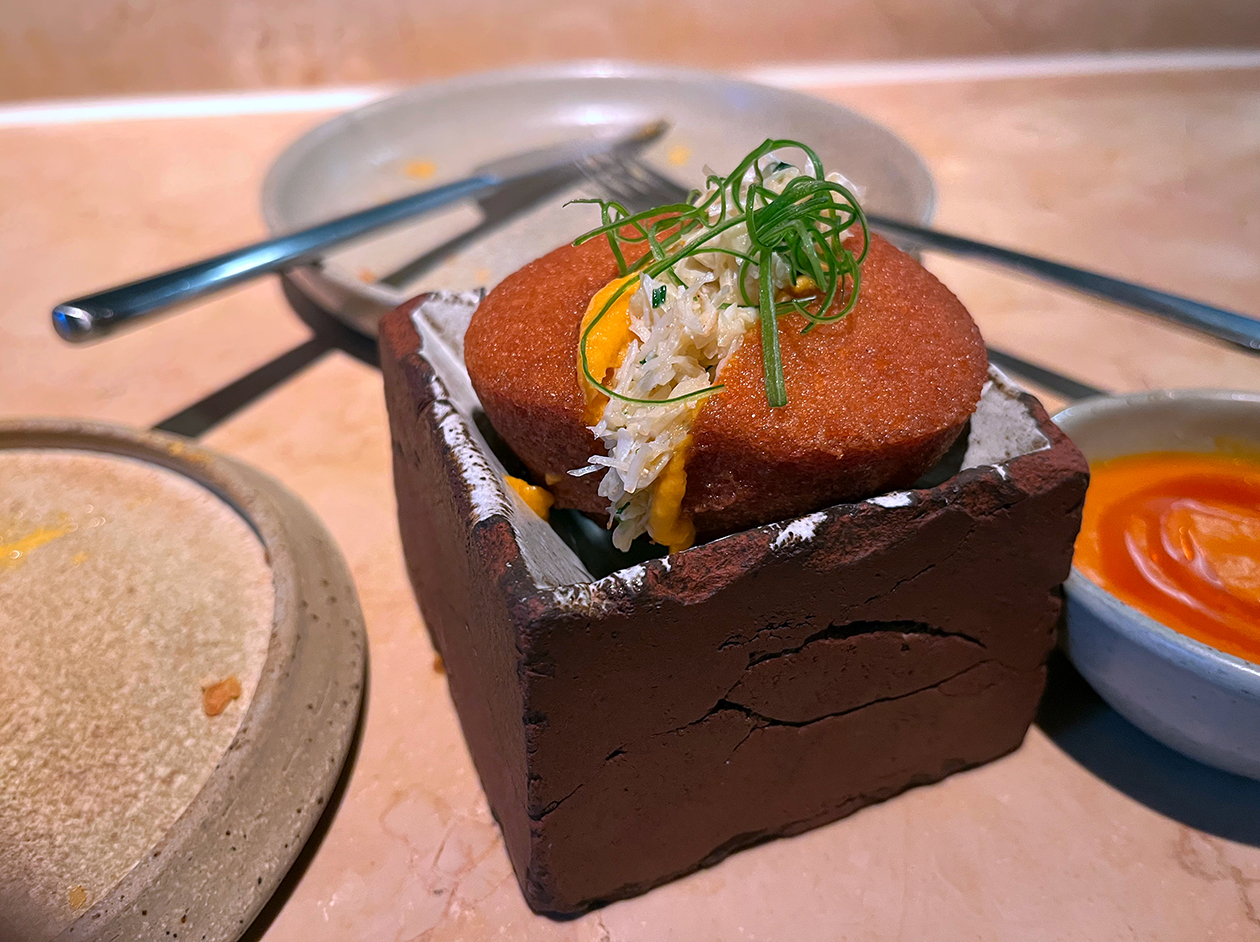
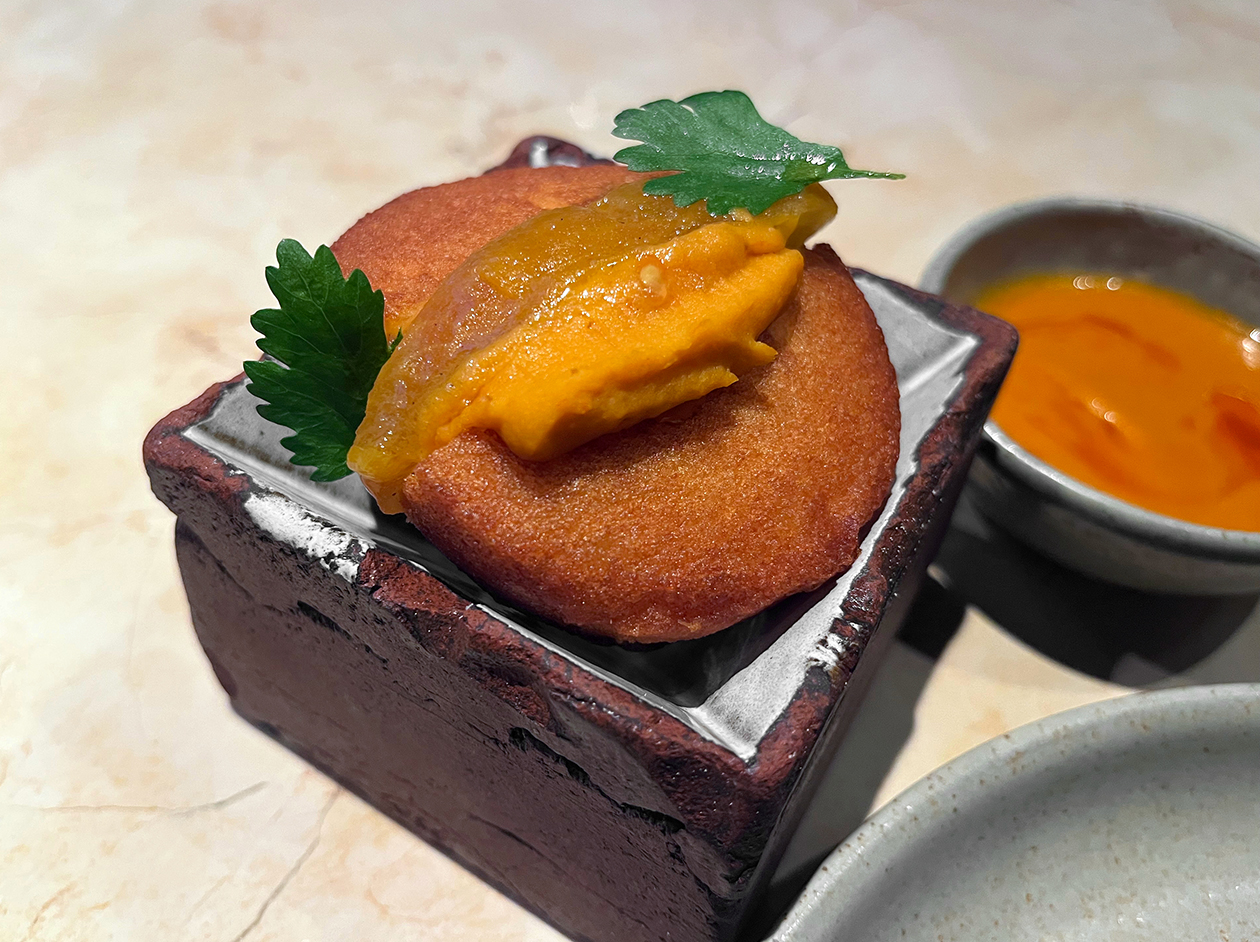
The eponymous akara are sometimes described as bean cakes, but to me their slight graininess and light bready nature makes them more akin to cornbread. The filling of barbecue prawn was leagues ahead of the other options, making it the one I returned to. Firm and briney crustaceans were well charred, with those qualities complimented well by the tingly and tangy hot sauce. The alternatives of shrug-inducing crab head meat or mildly fleshy and umami tomato just couldn’t compete.
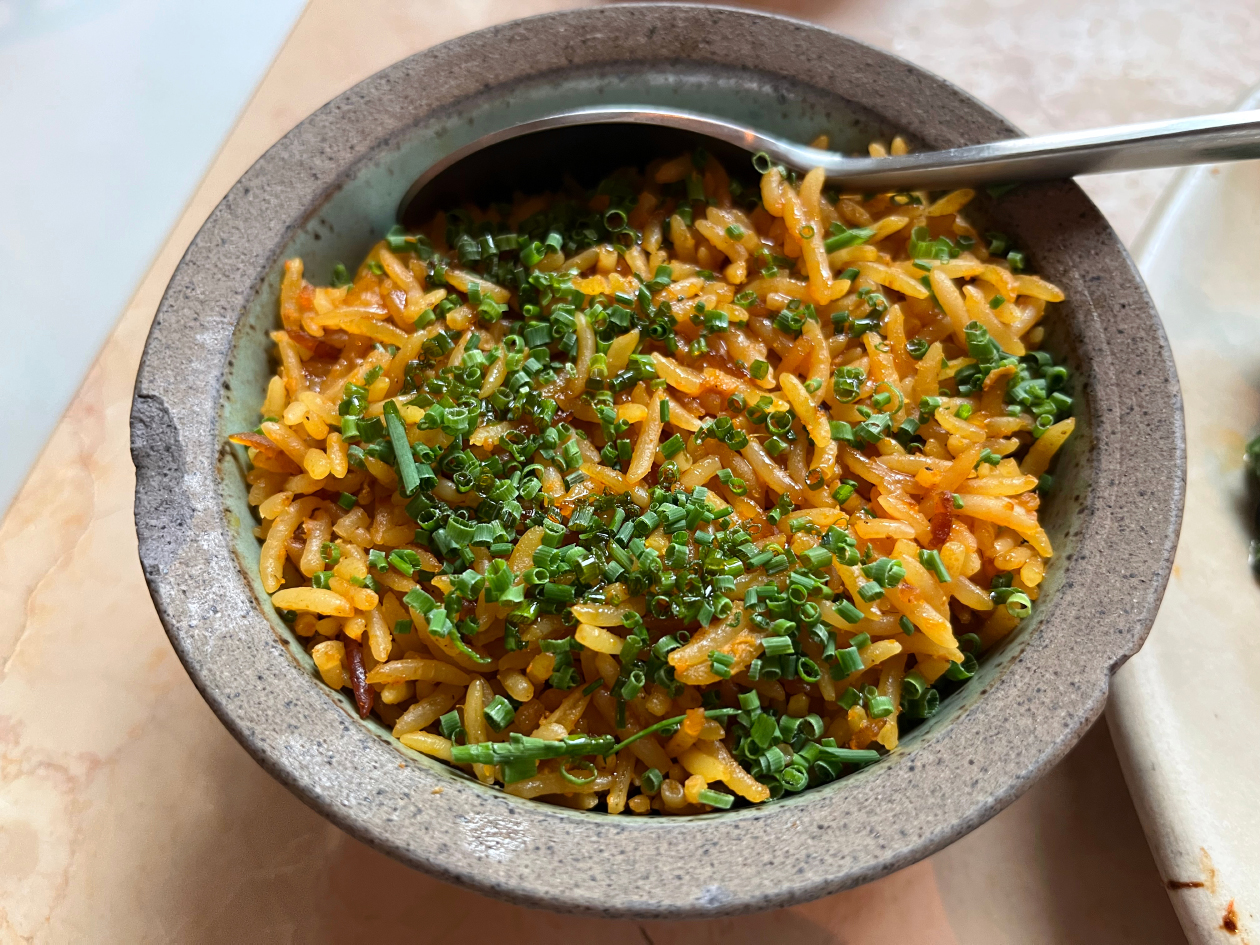
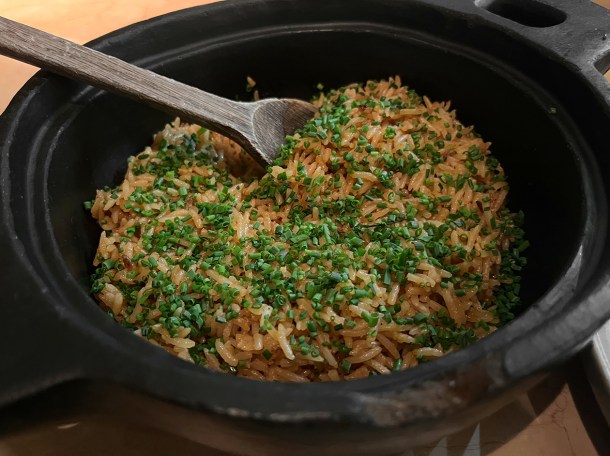
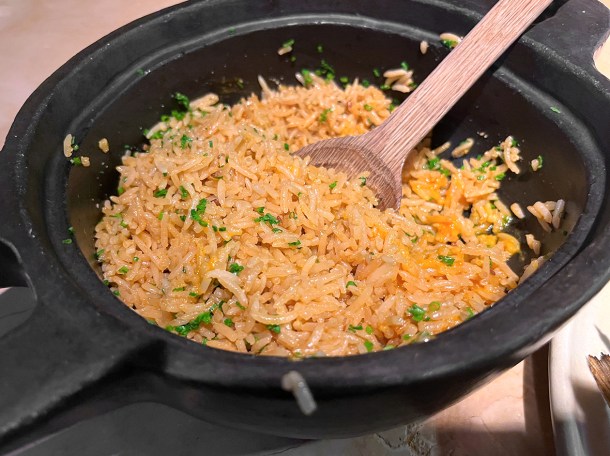
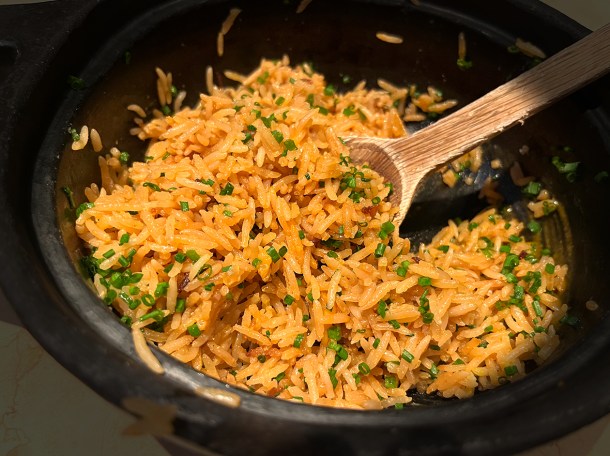
The sweet and mildly separated medium-sized grains of the Brazilian carrot rice were nothing to write home about. The efik rice, on the other hand, was a completely different kettle of grains. The small grains not only clumped together, but had an addictive umami and nutty warmth.
Main courses at Akara
Some people might turn up their noses at only getting the collar of a cod, rather than fillets or the whole fish. That would be a grievous error. Glossy, dense and juicy, the fish flesh and its charred skin peeled off the bone with ease. Although the moqueca sauce was surprisingly meek, the bitter chard was more than able to pick up the slack in complimenting the intoxicatingly addictive cod.
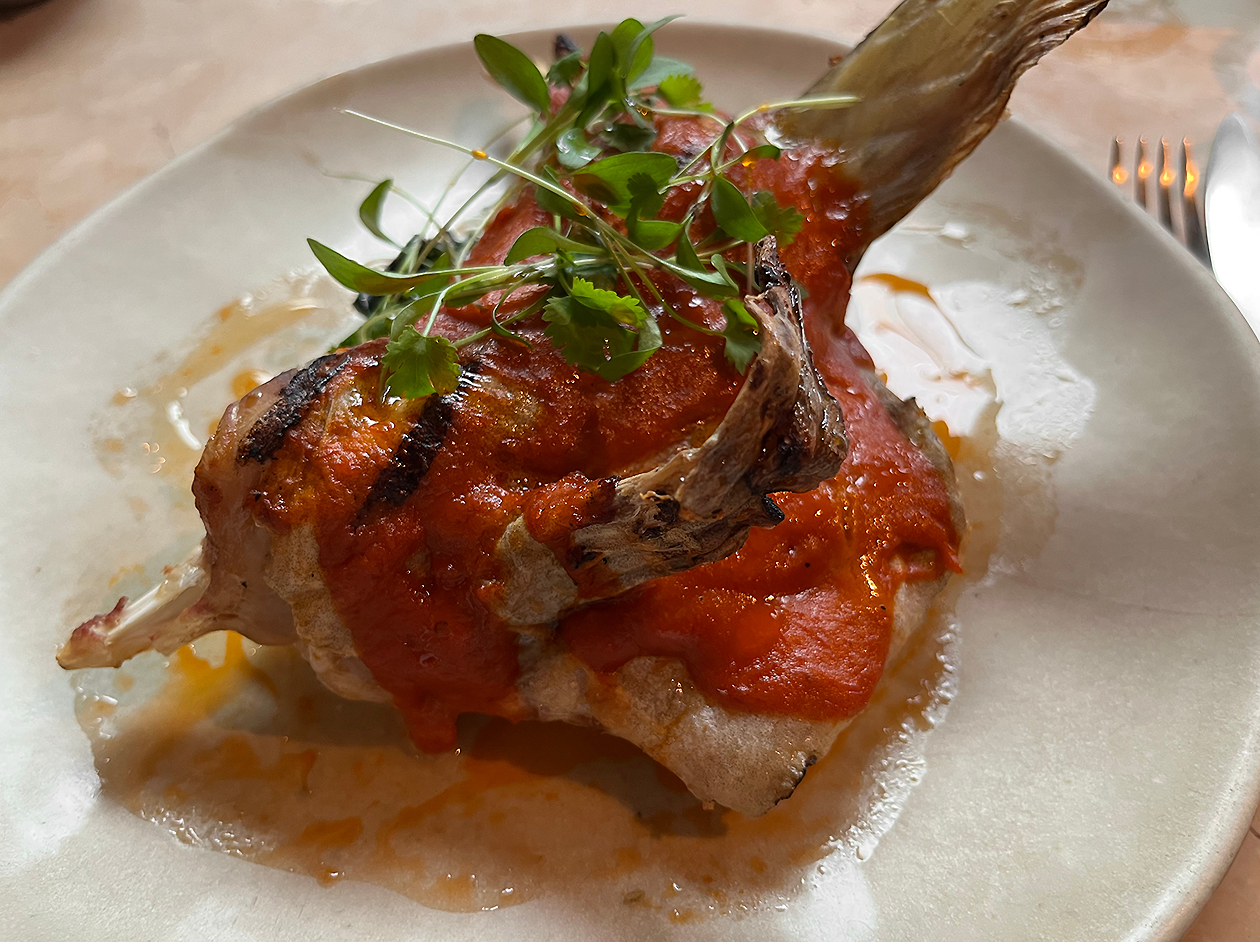
Sea bream, butterflied and grilled, was an encore of the cod collar in many ways, but that’s hardly a bad thing. The charred and smoky yet supple skin gave way to reveal moist, pearlescent and meaty flakes of fish. The caramelised onion and lemon dressing was more sharp than sweet and only very lightly zesty, but as this didn’t detract from the bream’s textural qualities, I’d consider this to be feature rather than a bug.
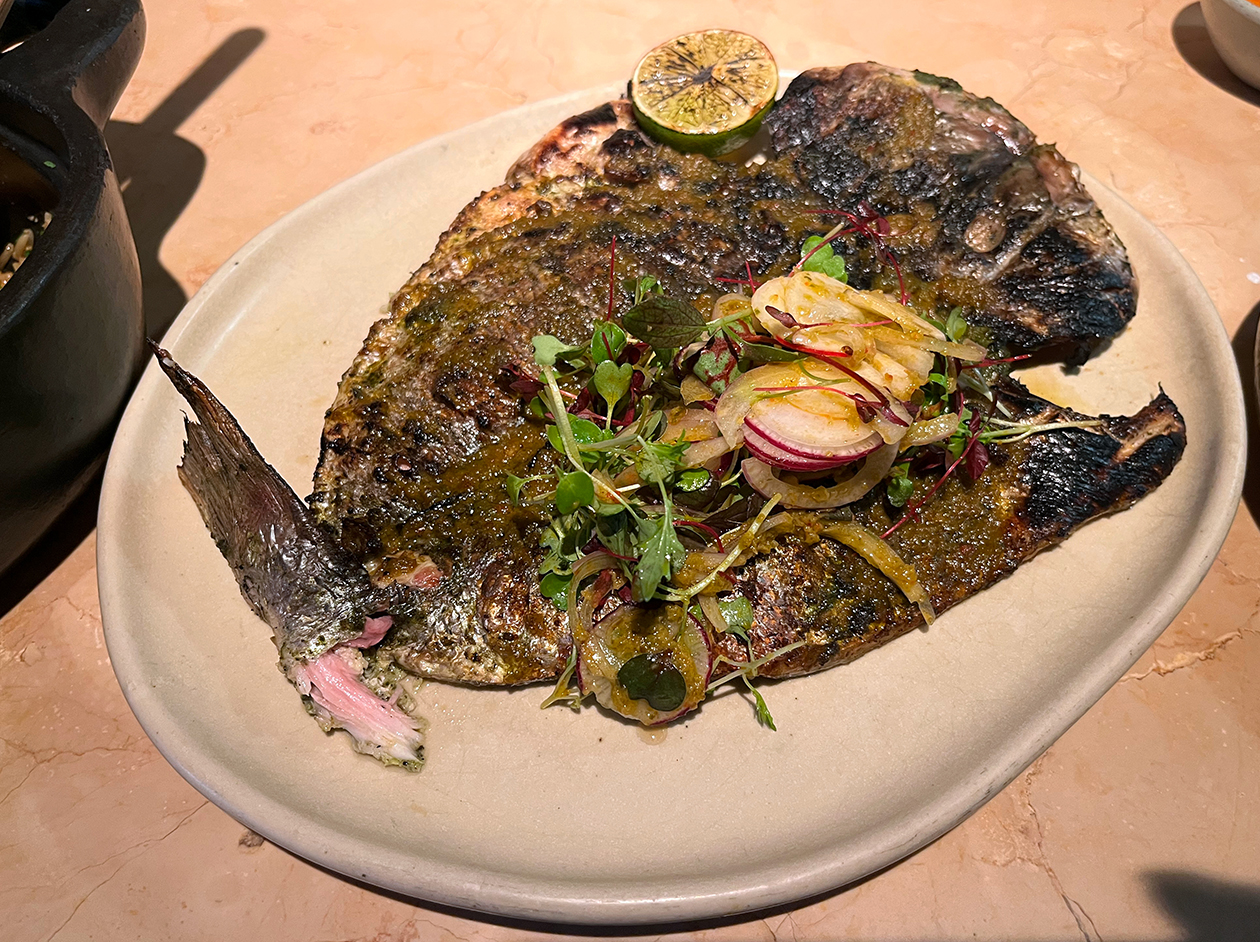
Cubed lamb was so dense that it was almost like mutton. This sumptuous mouthfeel, along with the lightly sweated onions, had to carry the dish as the modestly creamy sauce was lacking in the promised mustard.
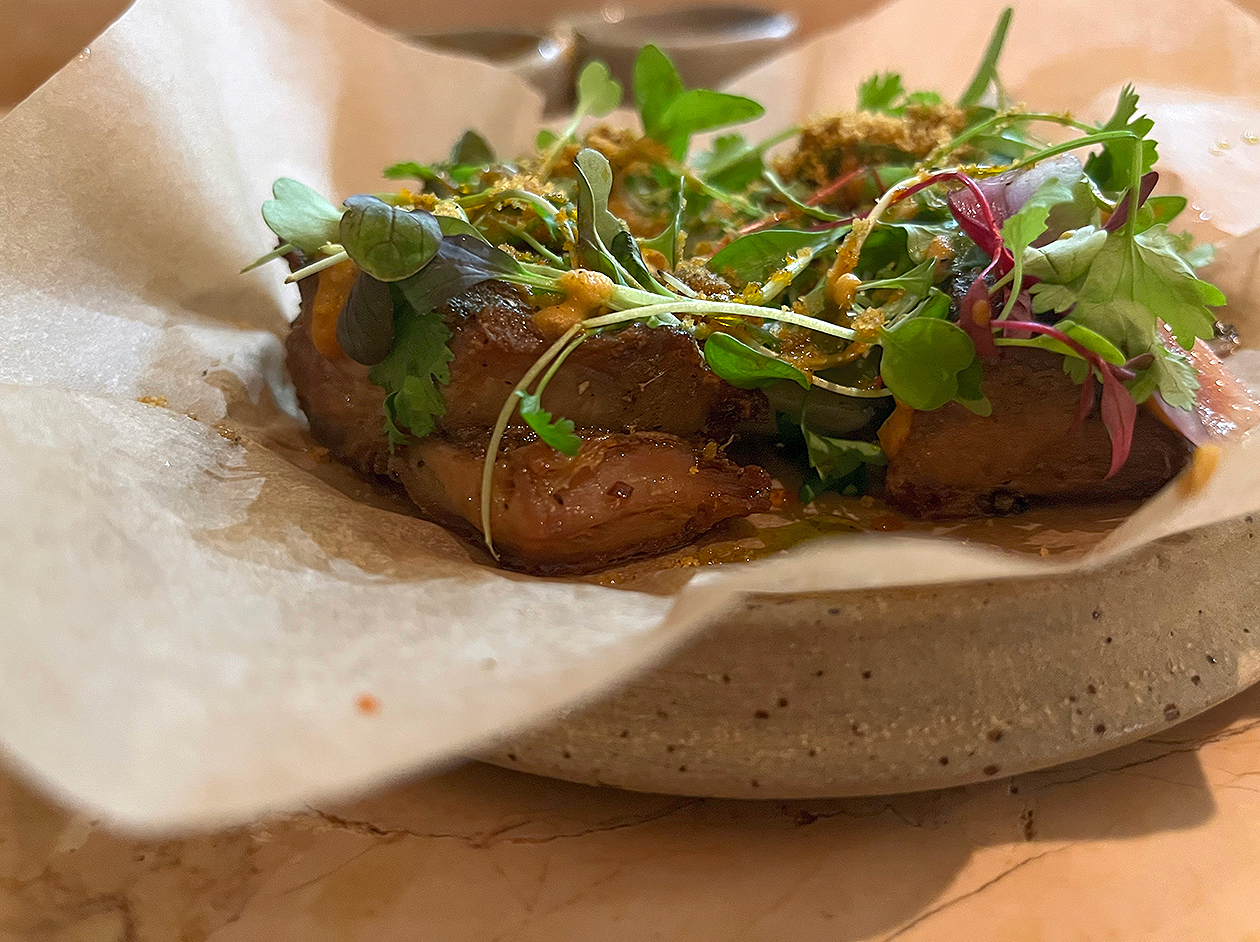
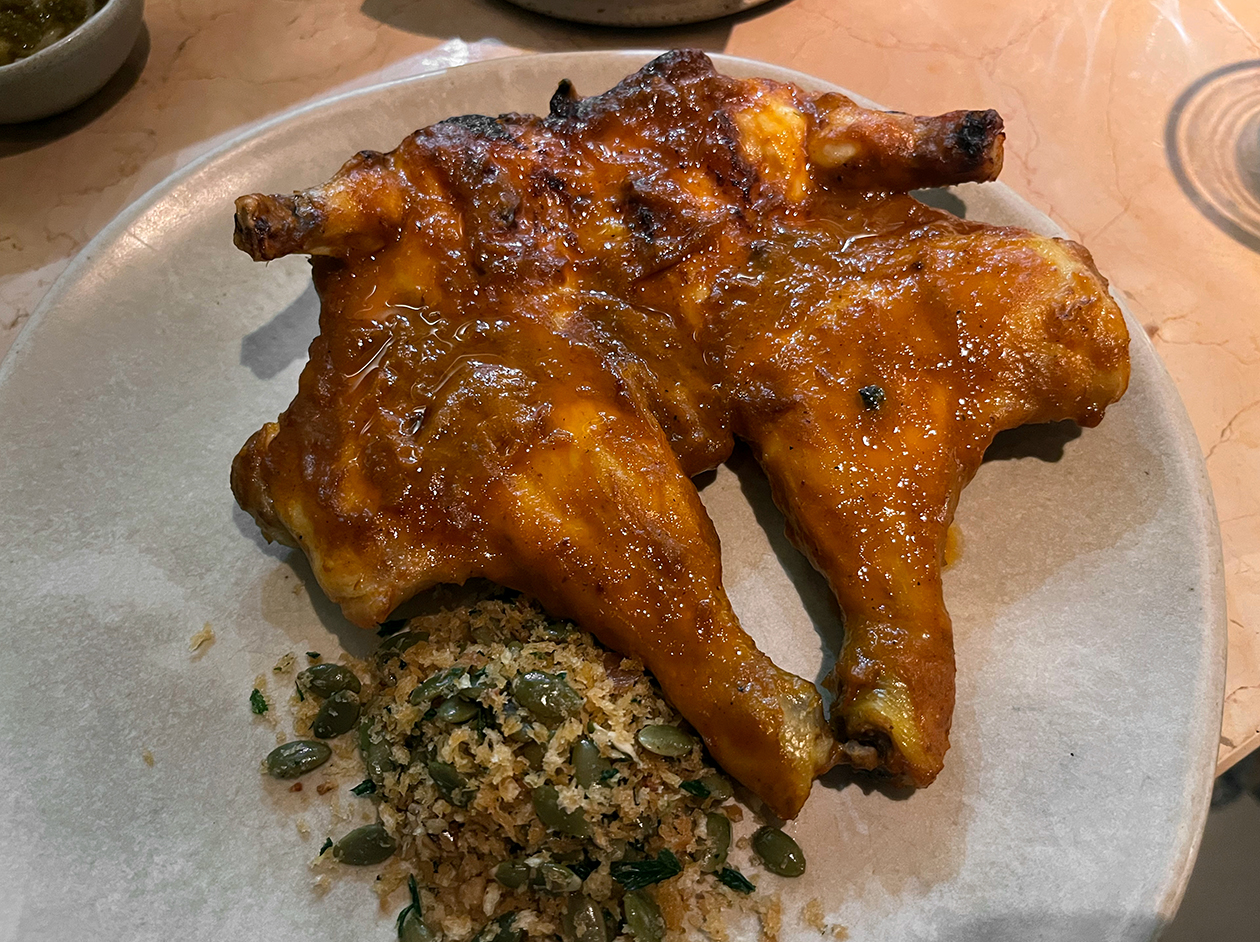
Poussin was not only surprisingly large, but moist and tender. It was a decent enough bird but, as expected for poultry in the UK, it was dependent on the lightly sweet and moreish sauce for flavour. As that sauce was a little too light for its own good, it’s certainly worth ordering some green shito for dipping.
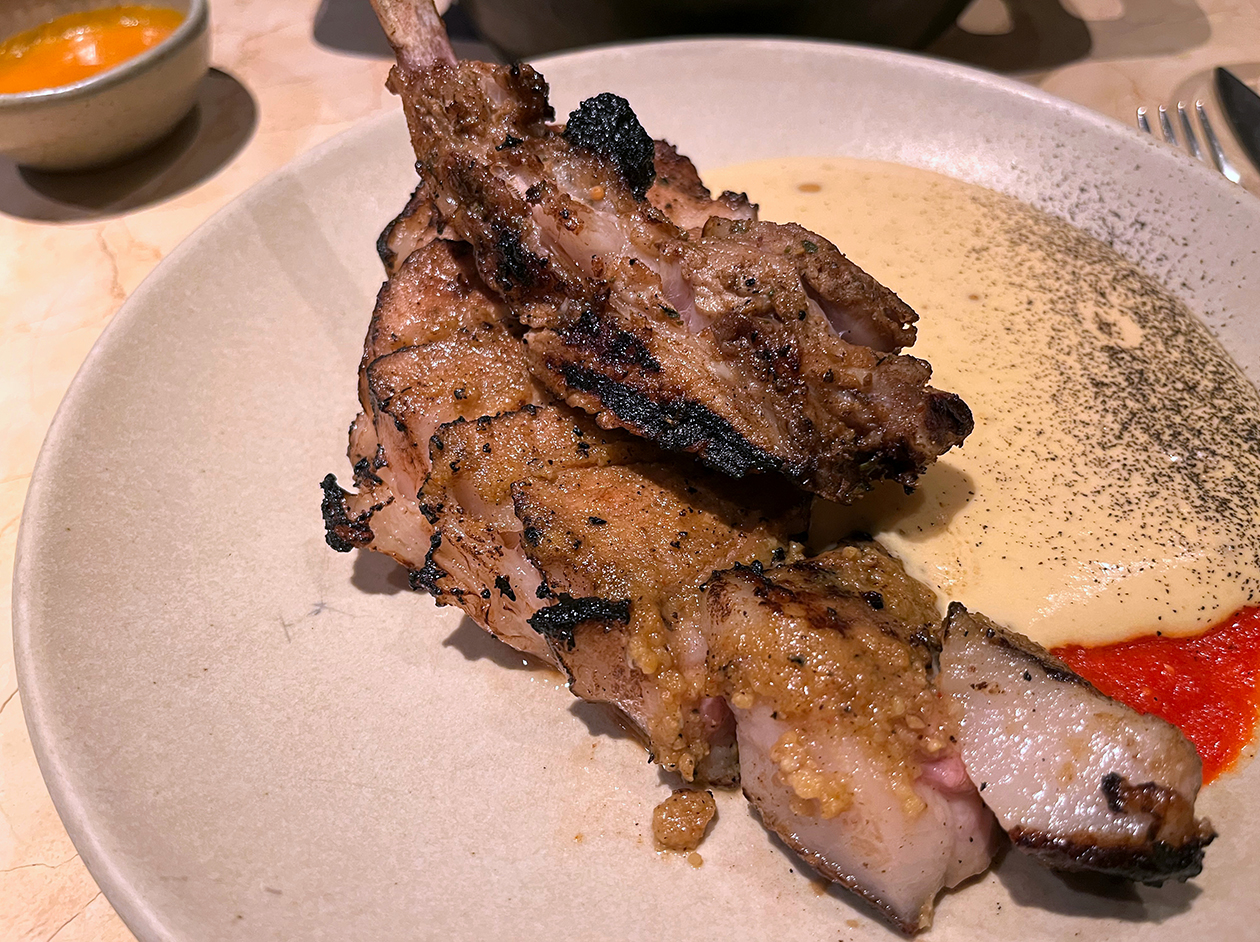
Grilled pork wasn’t especially characterful in of itself, but the somewhat drab swineflesh was livened up immeasurably by the cut including a thick, dense rim of yielding fat, as well as some deft grill work imparting a smoky char. The fermented chilli sauce had a potent kick to it, but there wasn’t enough to go around. Plus, it was easily outweighed and overwhelmed by the soothing calmness of the milky yam-based sauce. Aside from more characterful pork, this dish would benefit most from a more balanced sauce ladelling.
Desserts at Akara
Guava sorbet didn’t, unsurprisingly, manage to capture the signature scent of the fruit, but was otherwise a reasonable approximation of guava in a refreshing form, free of errant, crunchy ice crystals.
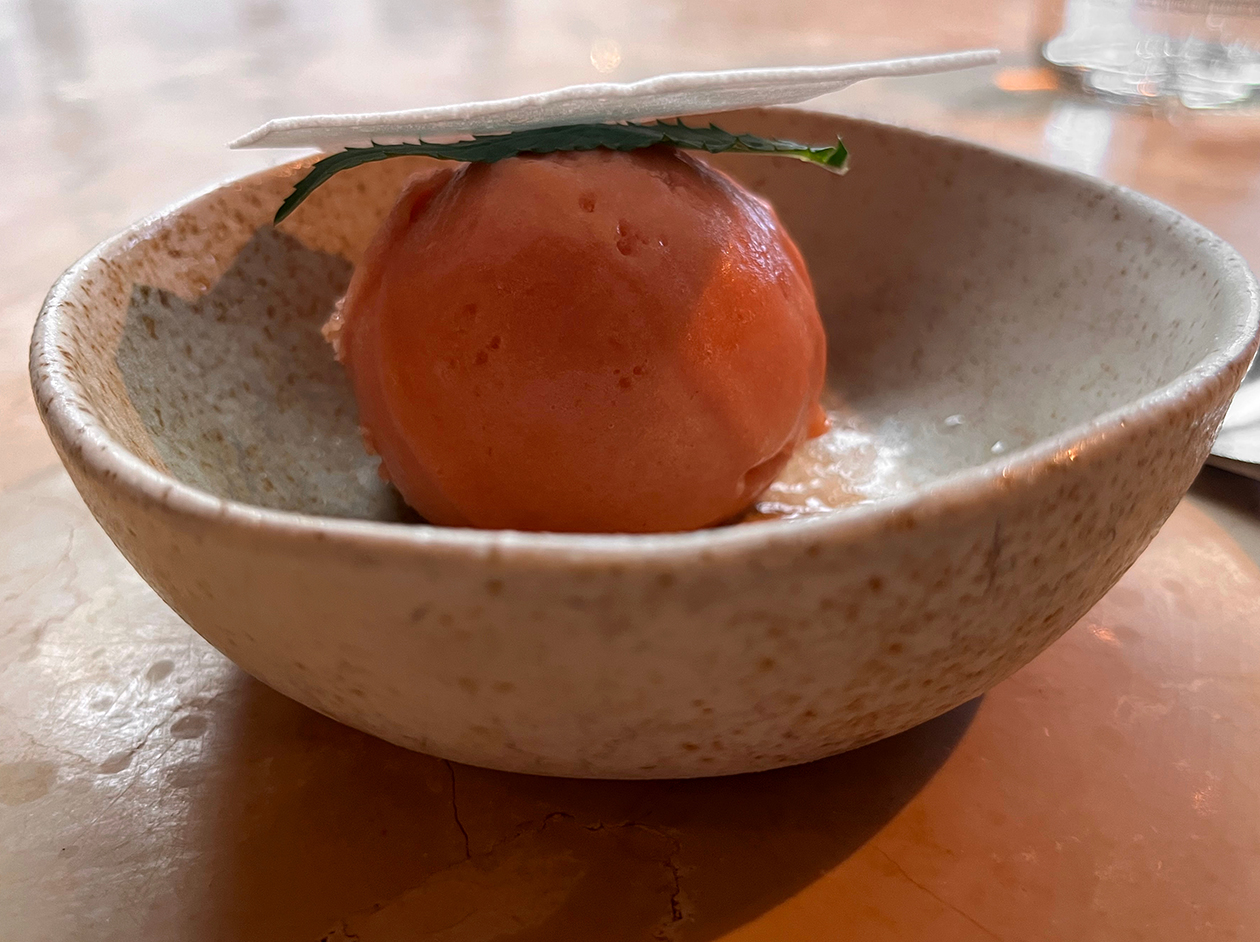
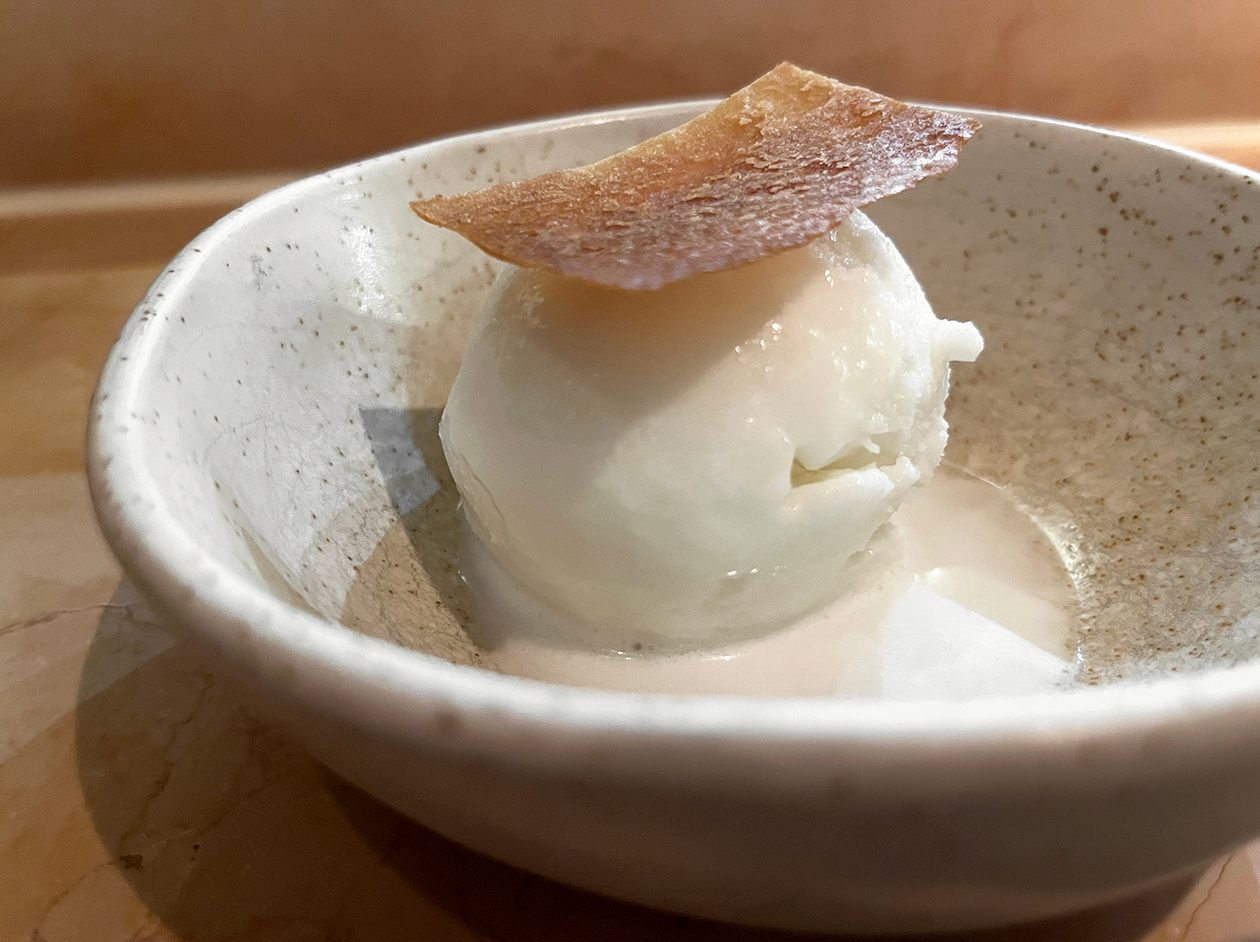
A sorbet of lime and coconut wasn’t zesty enough, nor was it especially evocative of coconuts. It was also a bit too grainy, with a handful of large, errant ice crystals here and there. It was at least refreshing though.
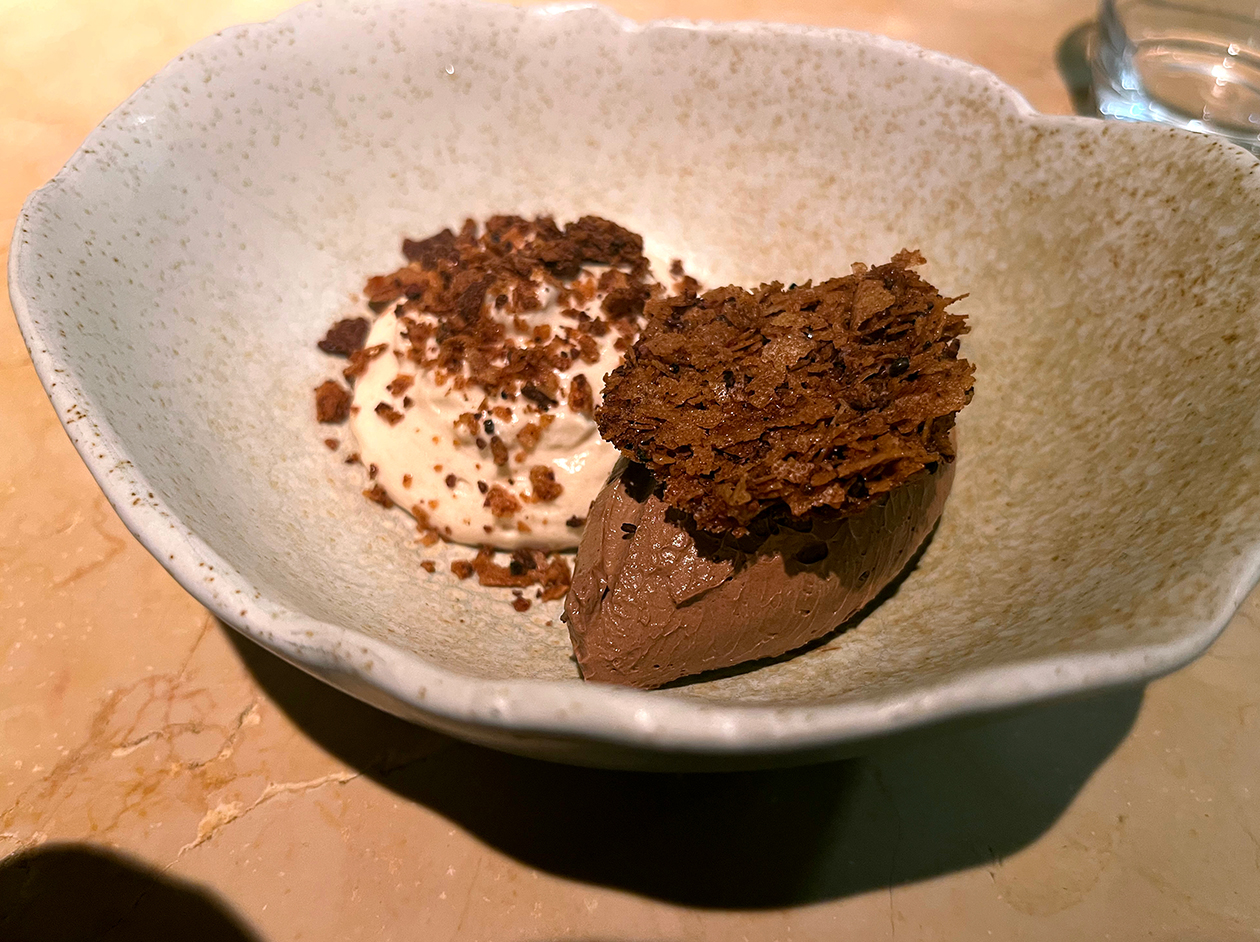
Banana mousse effectively captured the distinctive tang of that fruit and was all the more enjoyable for it. Its mirror opposite accompaniment, a chocolate mouse, was less memorable but still reasonably enjoyable with its creaminess and mild, honey-like sweetness.
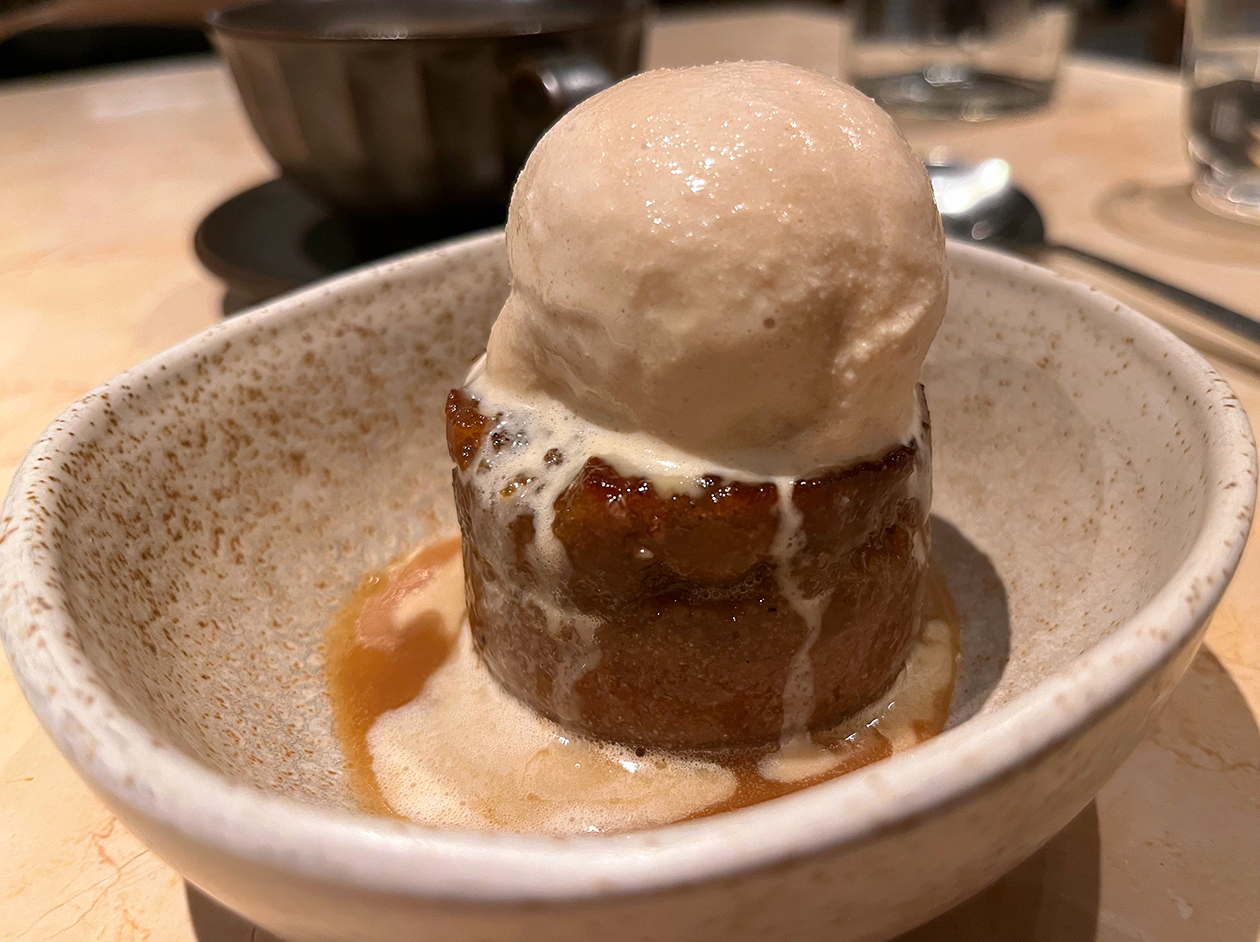
Plantain cake was unsurprisingly similar to banana bread, but this heap of sweet carbs was grainier, moister and sweeter than most banana breads. That fruity sweetness was helped along by the weaponised caramelisation of the smoked butter sauce. All of that was, in turn, offset by the cool, refreshing sweetness of the toasted milk ice cream. It may not sound like much on paper, but this turned out to be the best of Akara’s desserts.
The Verdict
Akara isn’t perfect, but the kitchen here has nonetheless demonstrated notable skill with fish, pastry and carbs. It’s somewhat weaker when it comes to red meat and desserts, but even here it can make the best of a less-than-perfect hand, once again demonstrating their deft cheffing.
From the outside looking in, one can only speculate as to how and why Akara has succeeded with its border-crossing West African menu where so many other ‘pan-[geographic adjective]’ restaurants have failed. Perhaps it’s because of its relatively narrow geographic scope. Perhaps it’s because of how cultural groups with shared or similar-enough culinary traditions crisscross the arbitrarily drawn borders of postcolonial West African countries. Perhaps it’s simply because the kitchen is staffed by highly-skilled chefs and the menu is at least priced somewhat high enough to keep them there. Or perhaps it’s all of the above. Whatever the reason(s), Akara is a treasure. But I don’t want it to stay that way. I want it to become the even-better version of itself that I know it can be.
Name: Akara
Address: Arch 208, 18 Stoney Street, London SE1 9AD
Phone: 0203 8615190
Web: https://www.akaralondon.co.uk
Opening Hours: Monday 17.00-23.00; Tuesday-Saturday noon-23.00; Sunday noon-22.30.
Reservations? essential.
Average cost for one person including soft drinks and service charge: £75-100 approx.
Rating: ★★★★☆

