These are the delicious (and not so delicious) meals that I hope you never have to taste
Much like the Spanish Inquisition, no one ever expects to have a stroke. I was supposed to have been gawping at the jagged peaks of the Nepali Himalayas while trekking through remote villages and up mountain passes. Instead, I was drilling holes into the ceiling of a Kathmandu hospital with my eyes.
The cause of my predicament, as I would later find out from the results of a MRI scan, was a minuscule blood clot gumming up part of the left-side of my brain, temporarily and partially depriving it of oxygen. As a result, I was unable to lift my right arm or the right side of my mouth. Somewhat fittingly for a restaurant reviewer, this Cronenberg-esque body horror happened while I was attempting to scoff some butter paneer masala at a Kathmandu hotel.
Having paid attention to the NHS public health campaigns back home, I didn’t need to Google the symptoms to know what they meant or how potentially life-threatening and life-changing they could be. That knowledge, and the fact that a hospital with one of Nepal’s leading stroke specialist units – the Grande International Hospital – happened to be a 10-15 minute ambulance ride away from my hotel, probably saved my life as I know it.
Time is absolutely critical when it comes to treating all strokes, including the ischemic stroke, that gummy little clot wedged in between my grey matter. The fact that I have made a complete and rapid recovery is due in significant part to the speed in which I was able to get treatment. Within two hours of my symptoms appearing, a MRI/CT scan had confirmed the presence of the clot and I was given the critically-needed drugs. So, in the seemingly unthinkable event that a stroke strikes you or someone around you, it’s really worth knowing what the symptoms of a stroke look like. It could save your life or someone else’s.
It’s almost certainly trite to say that everyone reacts to a potentially life-threatening medical condition in their own peculiarly unique way. For the first few days, I felt eerily calm. All the way from triage in A&E, to the screeching techno gig that is a MRI scan, through to the sleepless nights in ICU while tethered to a web of monitoring equipment. Unexpected yet welcome calm prevailed.
Eventually that stillness slipped away, like a badly-tied hospital gown. Bitter, resentful disbelief took its place. Disbelief that my body had betrayed me, just before my cherished annual rite of exertive rural locomotion. A body – which you may or may not believe given the usual contents of this website – had none of the risk factors for an ischemic stroke, from diabetes and high blood pressure to any sort of smoking and boozing.
This was soon joined by the gnawing uncertainty as to whether I’ll ever be insurable enough, as a healthy and recovered stroke survivor but a stroke survivor nonetheless, to go hiking at altitude ever again. I’ve only occasionally referred to this outdoorsy aspect of my life on this site over the years, but it holds just as much meaning to me as food and restaurants.
The bitterness, resentment and uncertainty were soon joined by exasperation and boredom. Cock-ups and delays in communication between my travel insurer and GP back in the UK delayed my discharge from hospital. As, without my GP’s records, my insurer wouldn’t pay my hospital bill. This, it turns out, is a surprisingly common problem for people in need of hospital treatment when abroad, although that only made the ensuing stress and uncertainty more infuriating, not less. Plus, as an exercise in reverse soft power, it showed the sclerotic bureaucratic mess of one’s own country to the people of another.
All of the above – that torrent of tranquility and torment – was punctuated by reassurance. The support of friends back home – through the power of messaging apps and a prepaid local SIM card – reminded me that while I was alone and far from home, home didn’t always have to be far from me. Well, time zone differences permitting.
Reassurance also came in the form of food. As seems to be common in much of the world – especially south, east and south east Asia – food isn’t included in one’s hospital bills. The idea is that patients can depend on their loved ones for food. As I was a solo traveller, I relied on ordering from the hospital’s canteen, Spice 7 (as I’m sure as heck was not going to use gig economy apps any more than absolutely necessary).
Some ink has been spilt elsewhere by others about the state of the catering in NHS hospitals and why it is the way it is. For some, food in a medical context can only ever be about physical nourishment and nutrition. Vitamins and minerals. For me, in those days of stents, solitude and sleeplessness, food was solace.
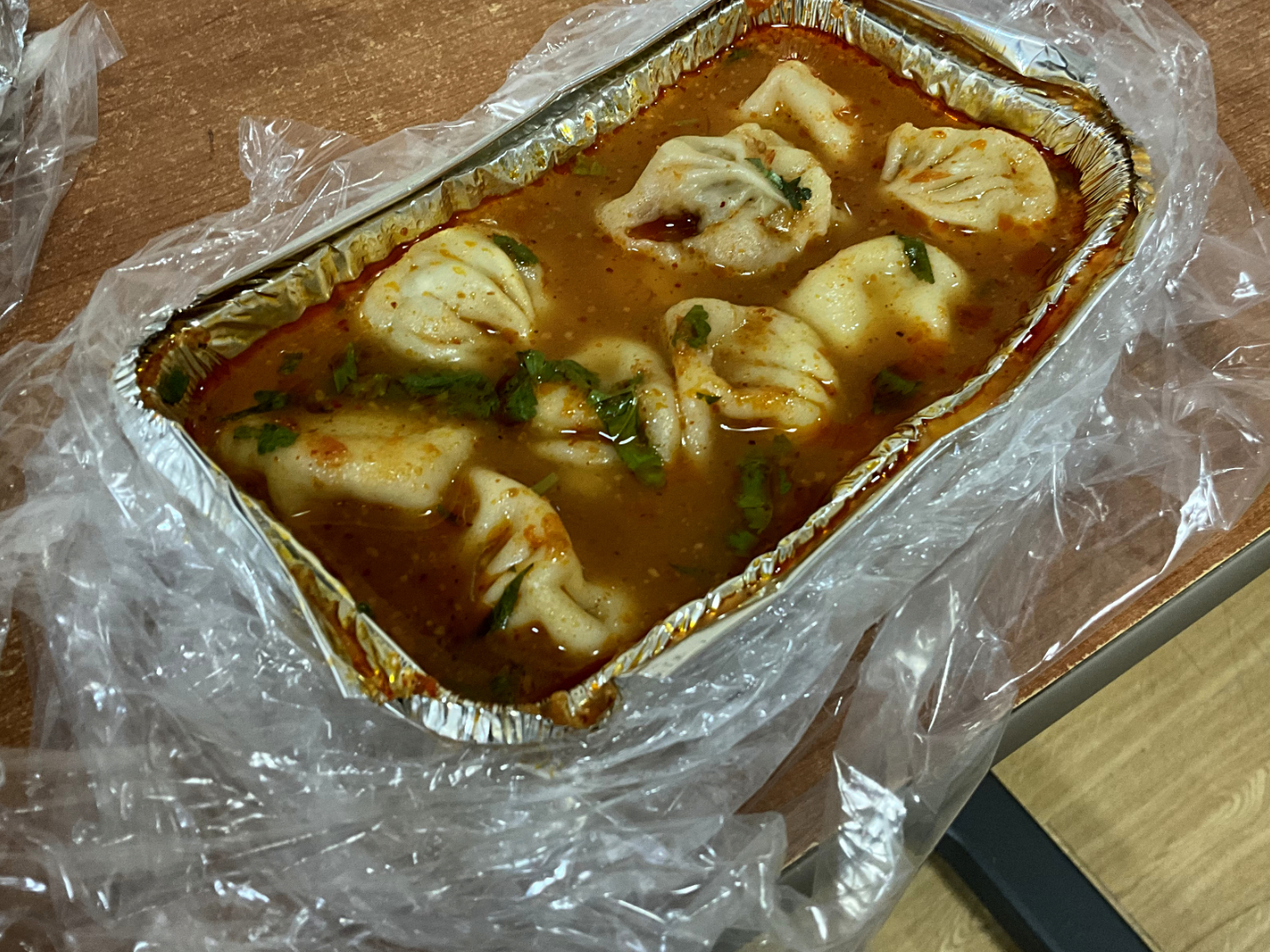
Even if I wasn’t already a fan of momos courtesy of Maya DD’s, Spice7’s dumplings would nonetheless have reminded me of the dumplings of my childhood. Doughty skins stuffed with hearty, moist meat. The chicken variant was surprisingly decent, the buffalo meat version even more so, coddling me with its mouthcoating denseness.
Chicken soup was neither Heinz nor Jewish penicillin. With only a modest creaminess to its name and a fleeting aroma of poultry, it was a meek and wan affair. For some people, that is what they want when their bodies are no longer the stalwart companions they once thought them to be. But that’s rarely what I want. And I even forgot to take a photo of this soup.
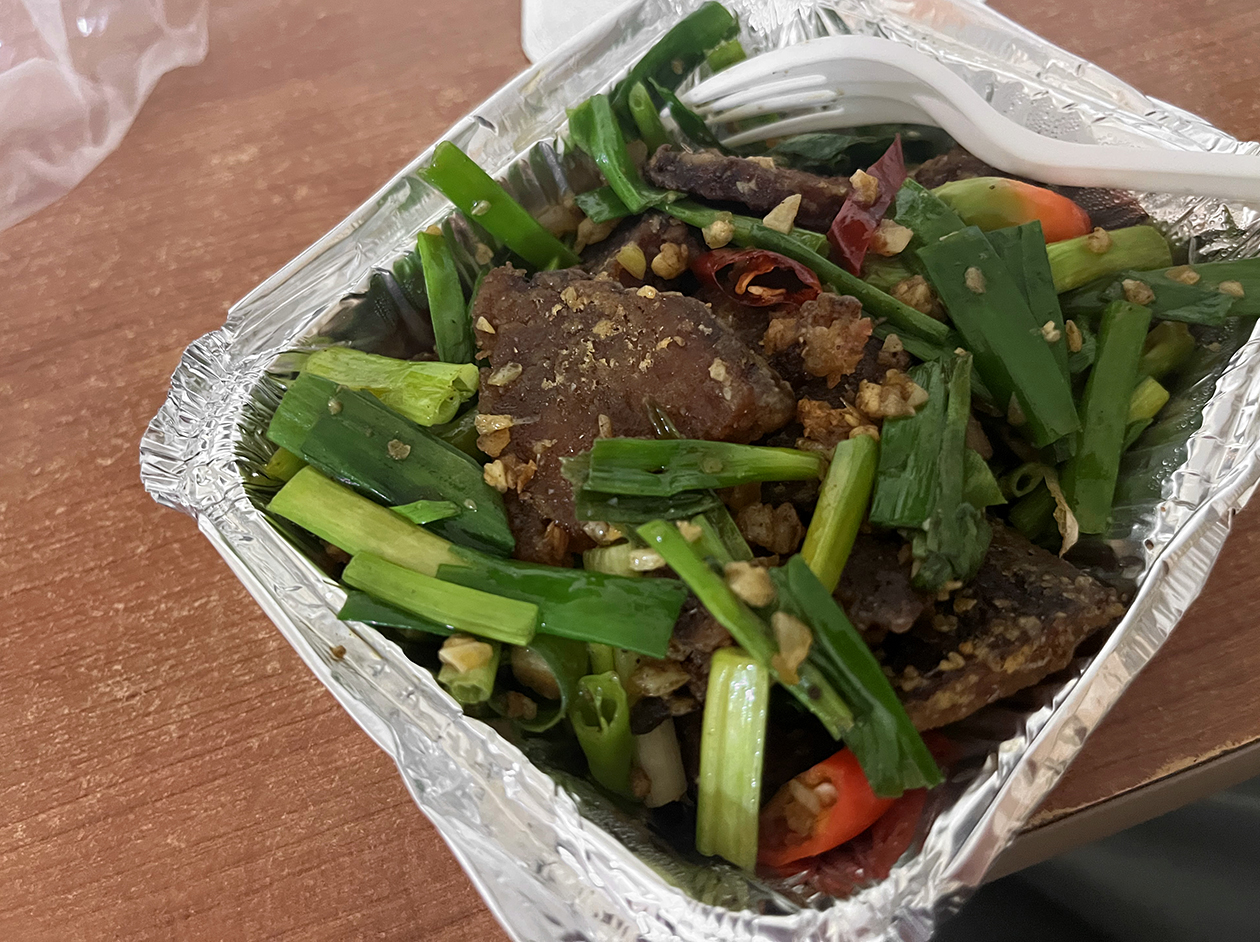
Along with momos, thick slices of dense buffalo meat, pan fried to a crispy finish, was what I repeatedly craved. Swirled with salt, pepper and onions, every mouthful snapped and sizzled.
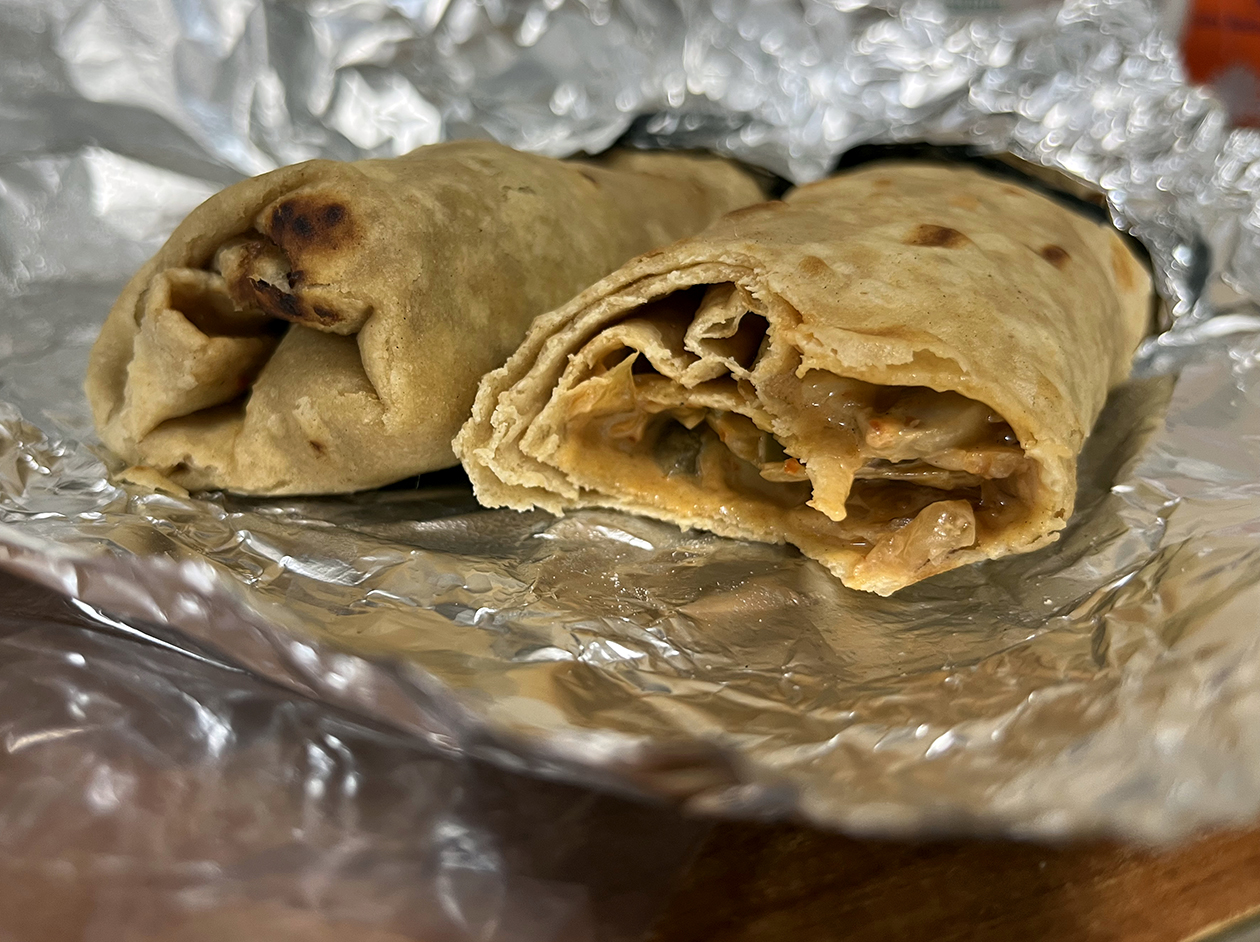
Soft, gently browned roti filled with tangy, lightly creamy vegetables might be an unorthodox pairing for the crispy buffalo meat above. But if Nepalis seem perfectly content to mix and match their dishes in all sorts of ways, then so should everyone else I guess.
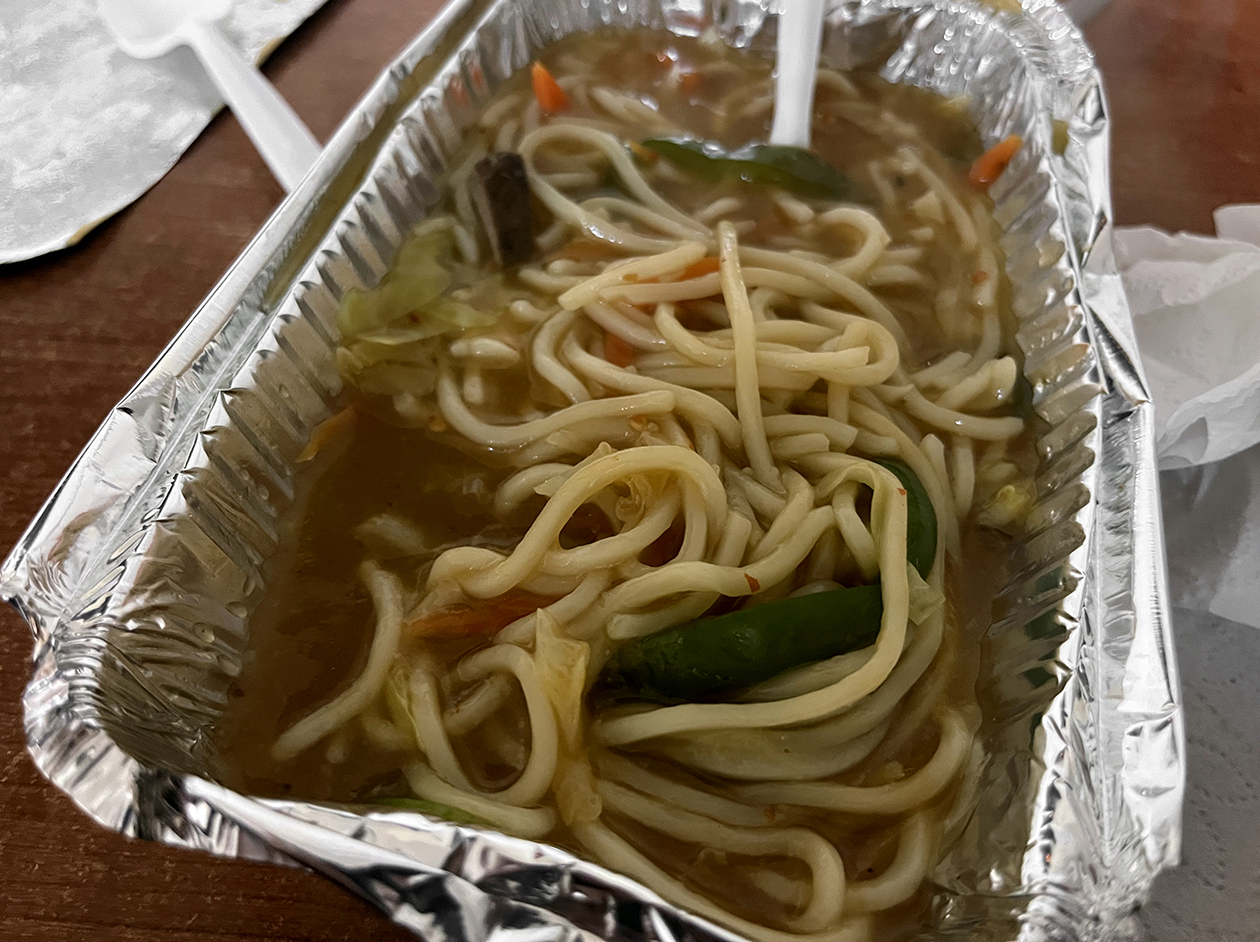
If dumplings top my personal list of comfort foods, then noodles would come a close second. Sadly, neither of the two Spice7’s noodle dishes satisfied my longing for lanky carbs. Buffalo thukpa consisted of risible chow mein-style noodles in a sticky soup that was – at best – intermittently moreish. Thin, scanty strips of buffalo meat were even less impressive.
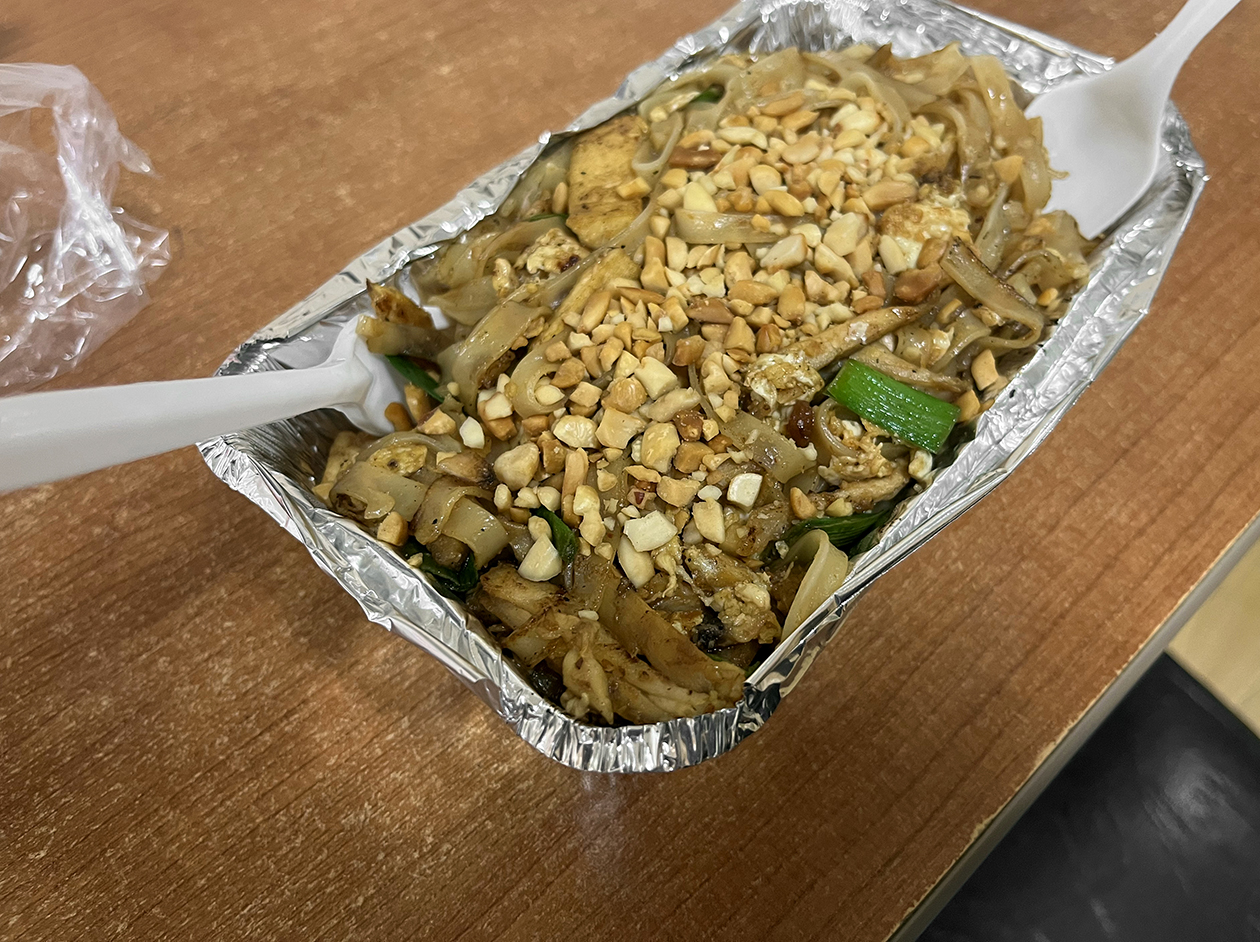
While the kitchen managed to use actual rice noodles in their chicken pad thai, narrow ones with moderate levels of thickness, the complete absence of flavour was startling.
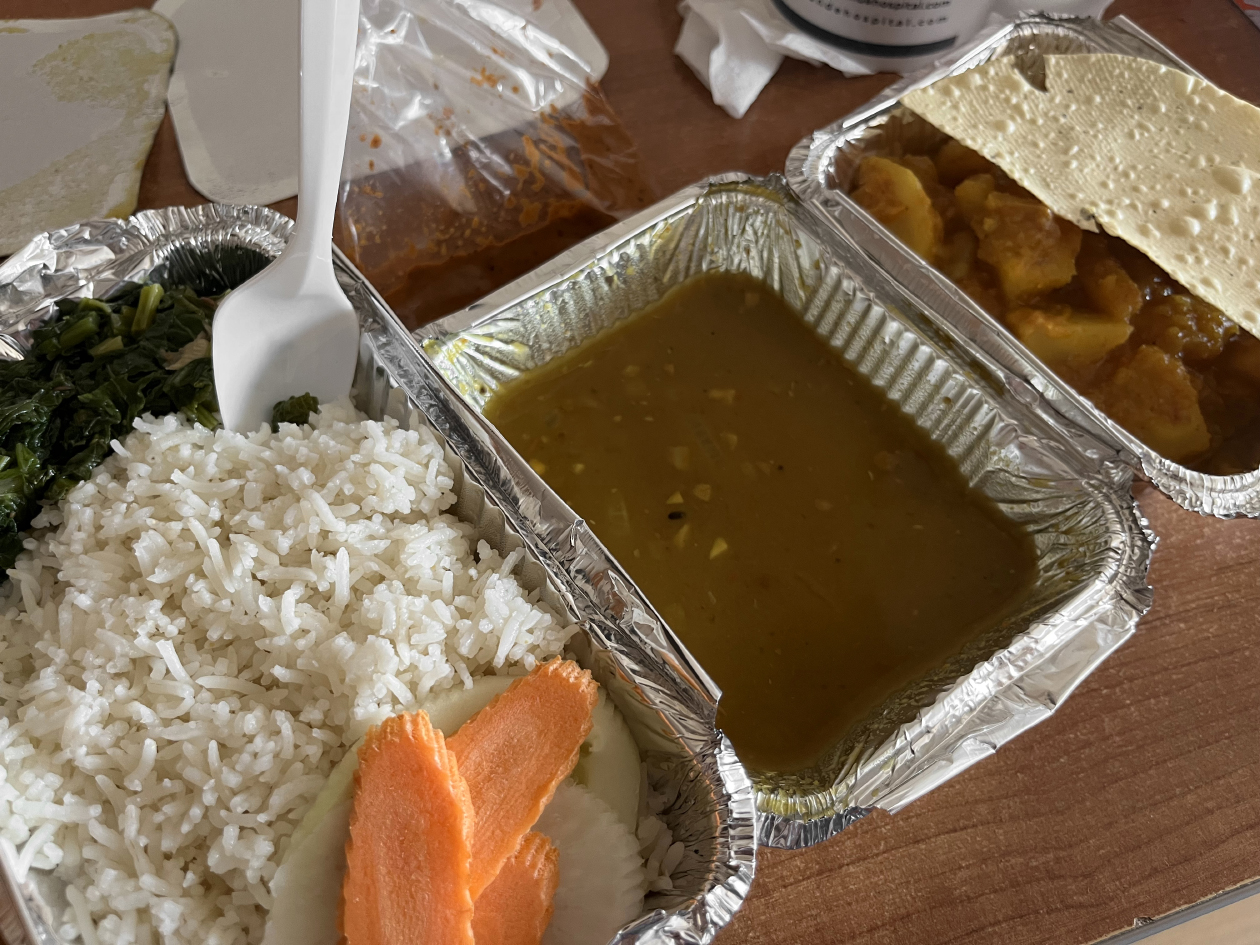
Dal bhat is a candidate for Nepal’s national dish and also fulfilled my craving for ‘curry’ – however you wish to define that – my third-favourite comfort food. Lightly nutty and moreish moong dal contrasted well with the refreshingly crisp bitter greens. Lightly spiced and tender potatoes made up the aloo achar, while a more astringent and tangy pickled chilli achar brought a bead of sweat to my brow. The papad was too small and soft, but the basmati-esque rice picked up the slack here.
The vast majority of articles that I write for this site have a clear purpose – to guide people to restaurants that are worth eating at. The purpose of this particular article was, and remains, less clear. Perhaps it’s a public service announcement, an attempt to find meaning in an inherently arbitrary situation or a stab at catharsis. Or perhaps it’s an easily-digested rumination on how good hospital food can provide a bit of comfort and light in the darkness of one’s solitude and uncertainty. Perhaps it’s all of the above.
But I know one thing for sure. I’m still really hungry. I can still see, smell, taste and enjoy the foods and meals that mean so much to me. And for that, I am grateful.
-TPG
 The Picky Glutton
I’m glad to hear you were helped so speedily. What Mazel!
Indeed! Although I do worry if my luck will run out at some point…
I spent a few long days and nights in an NHS Hospital with Epistaxis and was under strict instructions to not eat anything thermally hot. When I relayed this to the lady handing out the evening meal she told me to just let it go cold. Glad you are recovering. Will check the link.
So sorry to hear that.
I wish you well and hope you have a speedy recovery.
Thanks for all the reviews.
Thank you for the kind words.
Wow what a story. Glad you are better and thanks for the great reviews !
Pleased that this blog and writer haven’t come to a premature end, and I’ve taken your public service announcement in. Hope the recovery goes smoothly.